 Thankfully we had not unpacked any of our bags. After checking out and getting a refund, we were back on Khao San Road, which at the late hour was crawling with prostitutes. White men of all ages openly negotiated prices with the women (undoubtedly girls as well) with their wallets open. Some were bargaining for more than one woman. Eventually, we found a place and a thorough check revealed no bed bugs, a no prostitutes sign, clean white sheets and towels, working air con, a hot shower, and finally, a good night’s sleep.
The following morning we headed by foot to check out some of the sites. Stopping in front of a museum to review our map, we knew that our destination the Grand Palace was nearby. The Grand Palace is the residence of the King of Thailand who at the time was in the hospital. 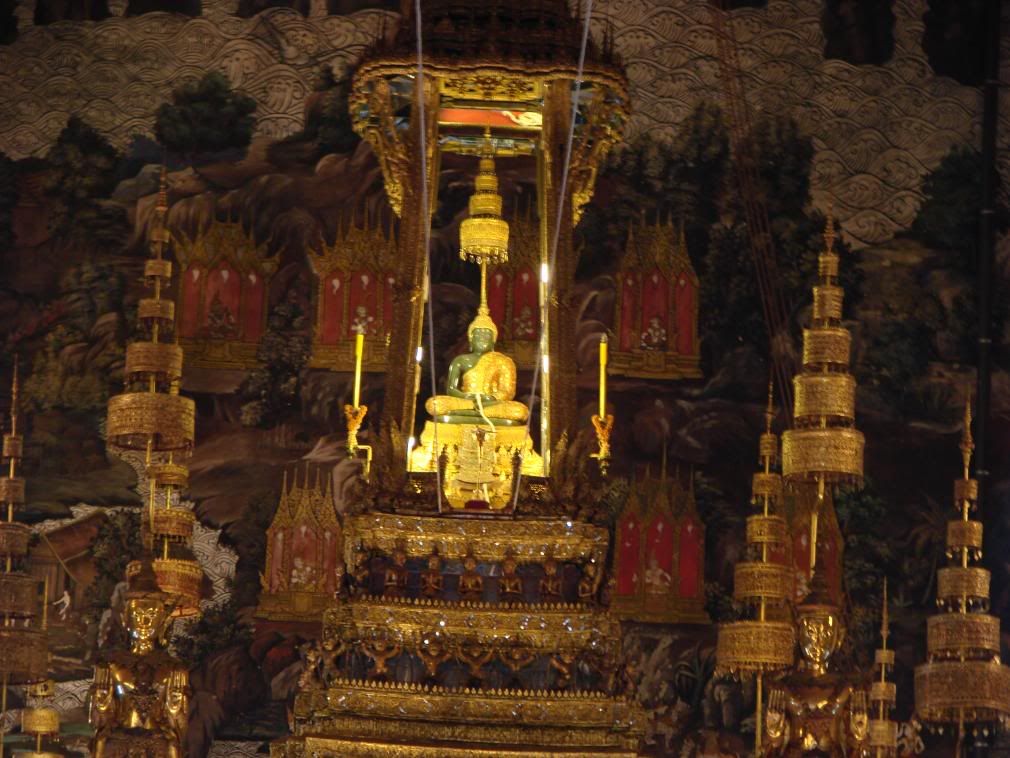 During our stay in Thailand, we would quickly learn that the Thais adore their king, who is the longest standing monarch in the world and is the 9th descendent of the Ramas. Rama I became king by rescuing an emerald green statue of Buddha (which is actually made of Jade) from an ancient Laotian empire that had stolen it. Even the teenagers are very adoring and Thais of all ages frequently wear these garish yellow shirts to show their respect.
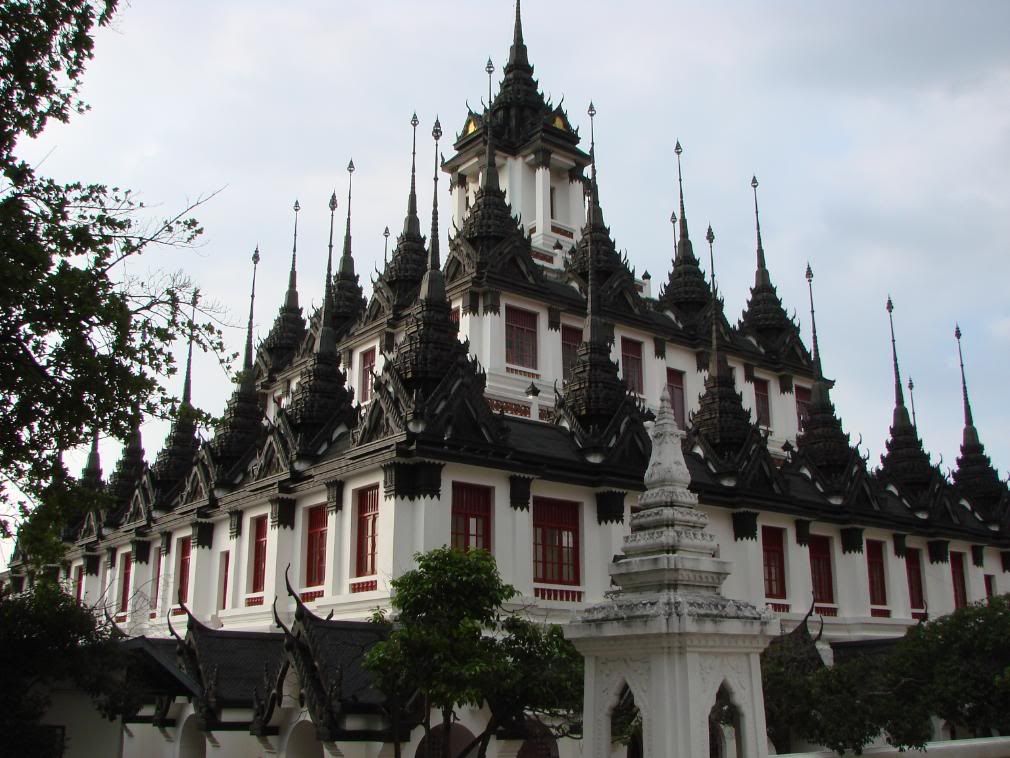
From nowhere, a Thai man in his mid-fifties asked us where we wanted to go. We told him where we were headed and he jovially explained that he was a teacher and had learned English a long time ago. He taught us how to say a few important phrases in Thai, which we practiced with him on the sidewalk. Then, he told us that our destination was closed until 2pm, but he could arrange a tuk-tuk (a motorbike with an attached seat on the back that fits two Western people, or six Asians) to take us to a couple of the other Wats (temples) of interest, one of the legitimate Thailand Authority Tourist (TAT) agencies, and then return us to the Grand Palace after it re-opened. What a friendly guy, we thought. He hailed the next tuk-tuk, negotiated a great price, and we were on our way. Our fist stop was a beautiful ornate Wat adorned with lots golden statues of Buddha and had many worshippers. At the second Wat, which wasn’t that interesting, we ran into another friendly Thai who showed us on our map that we were at a different Wat then we had agreed to. Oh well, we figured, perhaps it was on the way. When we arrived at the tour agency, we told the woman we were headed north and she offered us a tour of about 10 days for $900, which was a special deal only available that day.
  Keep in mind, Thailand is one of the cheapest places in the world to travel. Train rides for ten hours can cost just a few dollars and accommodation can be had for less than $5. We said “No thank you” and left with our tuk-tuk driver. Surprisingly, he then stopped at a silk and wool tailor shop, stating, “Free. Just look. I get petrol voucher.” We shrugged our shoulders. What could it hurt? Since neither Jason nor I needed fancy clothes during our travels, we left the store empty handed. Our driver seemed surprised by our lack of shopping but drove on, making a u-turn out of nowhere and stopping at another TAT office. We looked at each other skeptically but again told the agent our itinerary, only to be quoted an even higher price. Then, despite the fact that we asked our tuk-tuk driver to take us to a specific Wat, he took us to a different one, the Gold Mount. Priti protested but succumbed when the driver said, “Free, free, don’t worry.” After taking many pictures and ringing bells as prayers, we found the parking spot of our tuk-tuk driver empty. He had ditched us. We naively circled around the temple, thinking that we had
 arrived at a place different from the exit. We hadn’t even paid him! After some time, we realized that we had been the marks in an elaborate scam. Our guidebook had warned us about a few of the other popular scams, such as conning tourists into buying “gems” at ridiculously low prices. When we re-read the warning, however, we felt pretty foolish for not catching on sooner. Our feelings at the end of the day were relief (at not falling for the con) mixed with self-doubt (getting sucked in at all) to annoyance at wasting most of our day.
Fortunately, on our way home, we ran into a weekend festival, similar to the Taste of Chicago, where we feasted on fried eggs with seafood, various breads, and Thai iced coffee. We were stuffed by the time we reached the hotel where we rested before heading out to a club for some dancing. We got denied by about eight cabbies, some of whom laughed at us when we asked them to use their meter.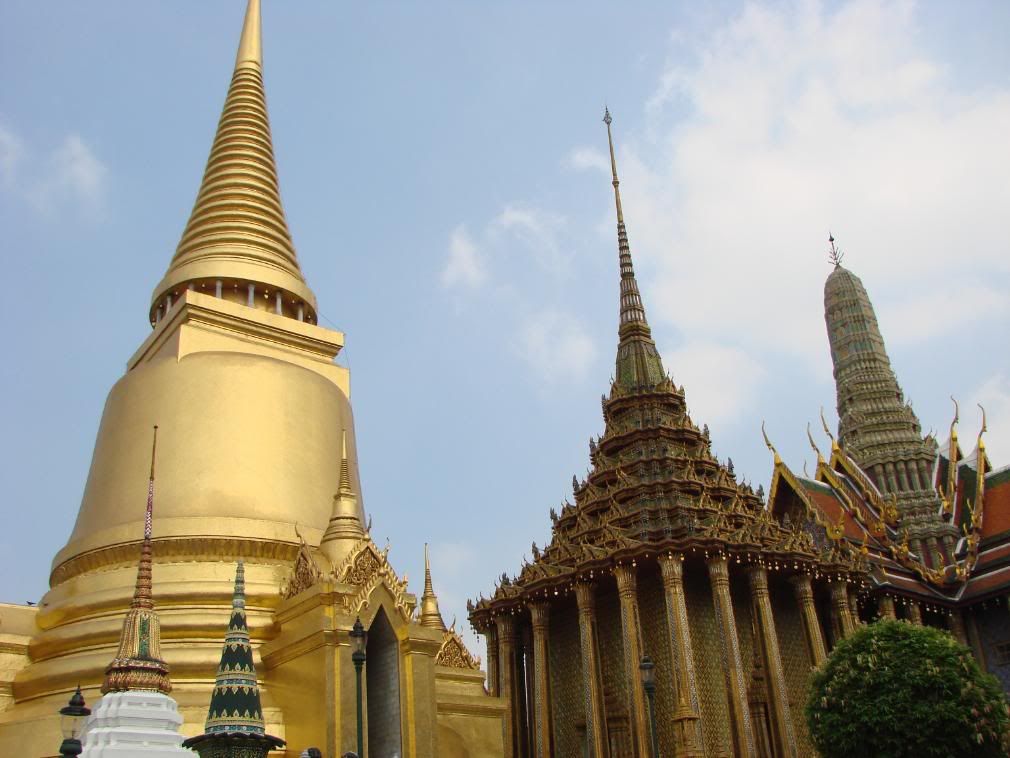 The music was hopping and we enjoyed the scene which was mixed with westerners and locals, mostly women. We wondered how the men determined if the woman were working or genuinely out to have a good time. Anyways, Priti had a few Vodka/Red bulls followed and was unable to fall asleep and her body was buzzing. She learned later that one Red Bull in Thailand is equivalent to three cans of the Red Bull sold in the States. Searching for a taxi at the wee hours of the morning proved to be challenging, not because they were lacking but because the drivers wanted to charge three to four times the cost of the trip. Finally, one agreed to a reasonableFortunately, meandering back to hour hotel, we came across a huge outdoor market that was only around for that weekend (sort of like the Taste of Chicago) where we gorged on satay fixed price (still higher than our trip there) but proceeded to ask for more money when dropping us off...fat chance!
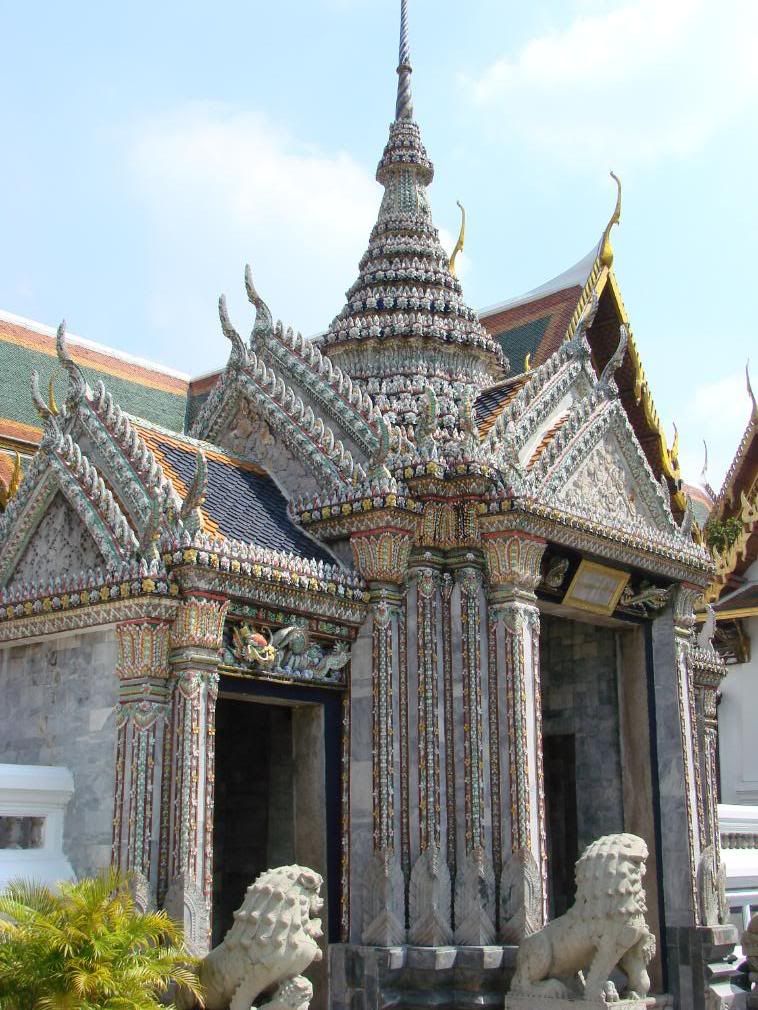
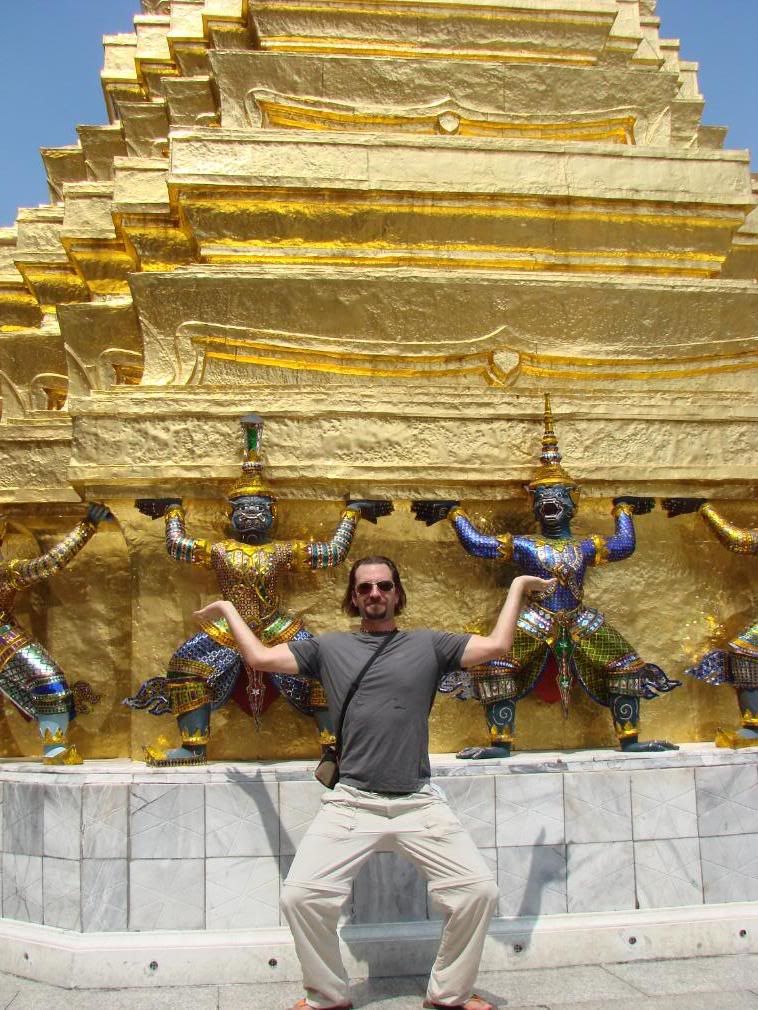
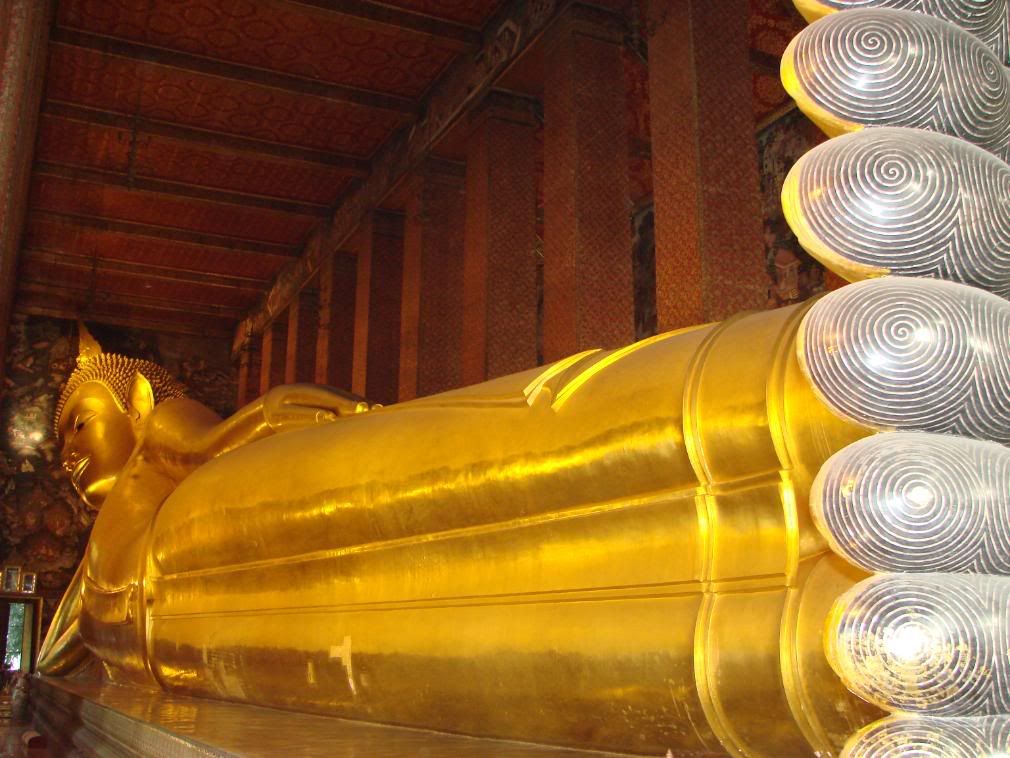
The following day, we decided once again to see the Grand Palace and started walking. We rounded a corner and observed our “teacher” friend sitting on a stoop, watching the tourists walk by. He initially pretended not to recognize us, but Jason greeted him and laughed, “You almost got us, didn’t you?” The “teacher” shrugged his shoulders, tried to look innocent and continued to watch more tourists walk by and figured out whom to approach next.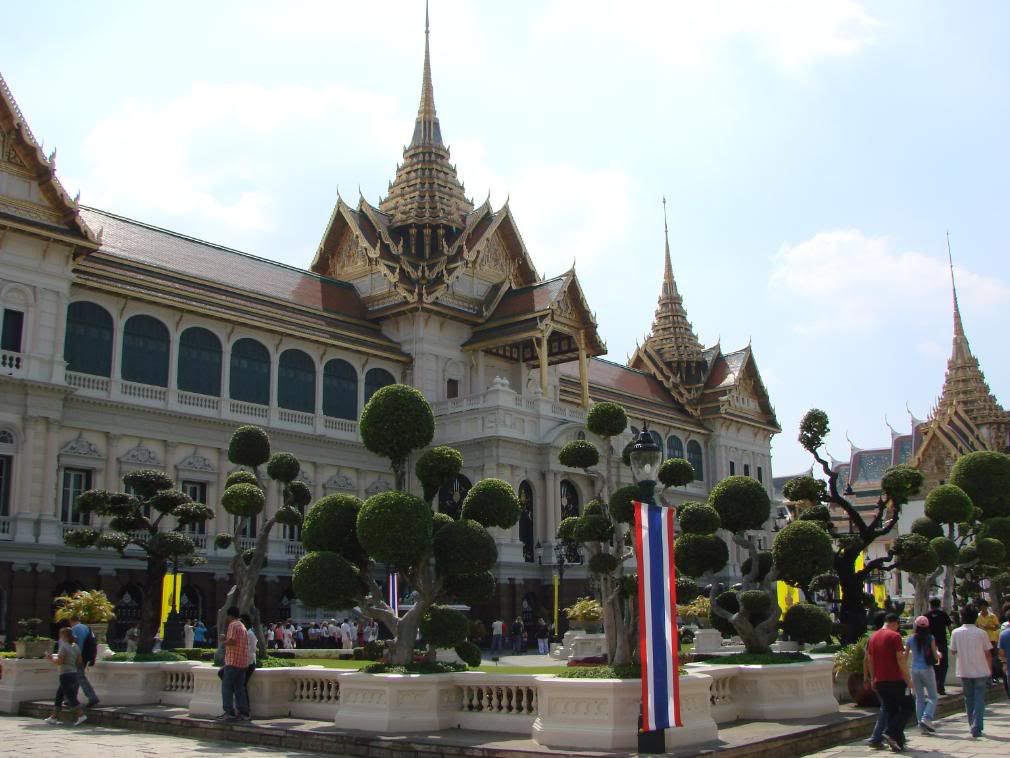 As we walked on, it seemed like every single taxi and tuk-tuk driver would ask, “Where you go?” which was the complete opposite of how they had treated us the day before. Finally, we arrived at the Grand Palace. As we'd discovered in Malaysia, there were different prices for locals (free) versus tourists ($7!). We've discussed with other travelers how that kind of discrimination would result in a lawsuit in the United States or in Europe. Nonetheless, we paid our fees and entered a majestic world of ornate temples, buildings, and landscaping. The Grand Palace is indescribable. It makes the White House look like a cheap motel. We felt like the Japanese in the huge tour groups, living life through our camera lens as we snapped one picture after another, over 100 that day alone. Some of the highlights included the Emerald Buddha (the first picture, though it was much smaller than we'd expected) as well as the largest Reclining Buddha in the world, at about 190 meters (600 ft) long. It's hard to convey how massive it is, but perhaps the following two pictures will help (neither of which were zoomed in at all).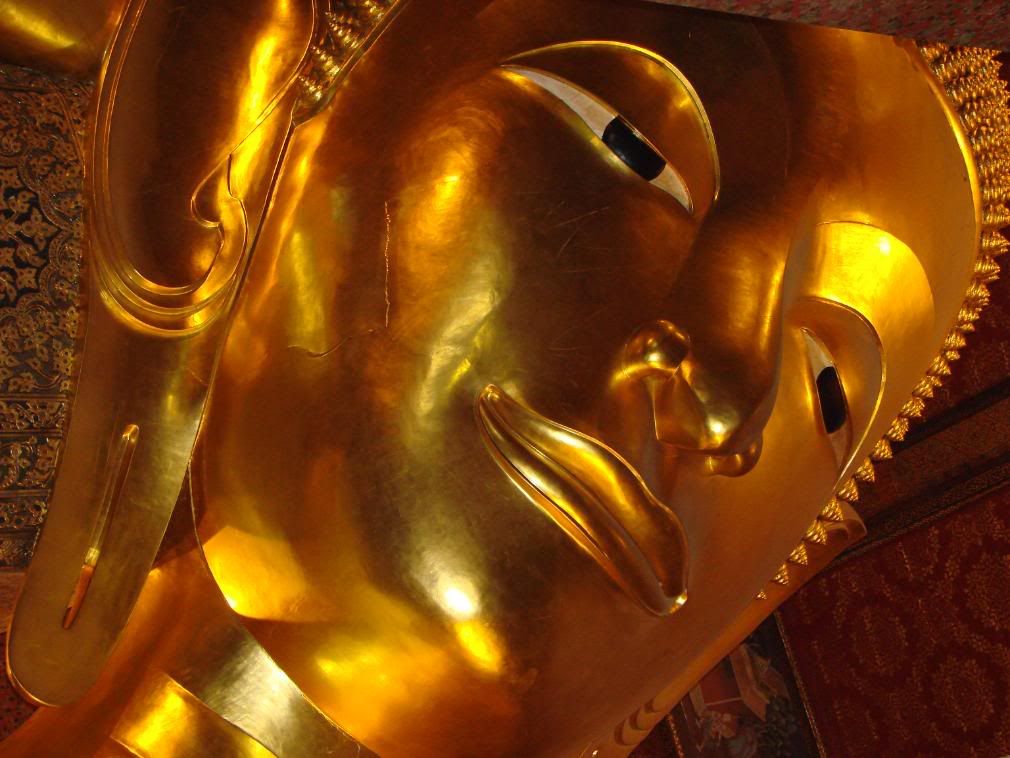
 Later on, we were ushered into a courtyard, only to sit cross-legged for over an hour with the locals to witness three of Thailand’s princesses walk by and wave. Yippee! Later that night, we explored a different lively neighborhood of Bangkok and went to this bar to watch a Thai boxing match. Although Priti endured it, Jason thought it was exciting and it ended in a knockout. Punches thrown everywhere, jabs, elbows, and knees in the stomach. Immediately after the boxing match was over, the ring transformed into individual platforms and dancers without any rhythm came out who looked like they were fifteen. One even had braces. We left immediately.
During our stay in Thailand, we would quickly learn that the Thais adore their king, who is the longest standing monarch in the world and is the 9th descendent of the Ramas. Rama I became king by rescuing an emerald green statue of Buddha (which is actually made of Jade) from an ancient Laotian empire that had stolen it. Even the teenagers are very adoring and Thais of all ages frequently wear these garish yellow shirts to show their respect.From nowhere, a Thai man in his mid-fifties asked us where we wanted to go. We told him where we were headed and he jovially explained that he was a teacher and had learned English a long time ago. He taught us how to say a few important phrases in Thai, which we practiced with him on the sidewalk. Then, he told us that our destination was closed until 2pm, but he could arrange a tuk-tuk (a motorbike with an attached seat on the back that fits two Western people,
or six Asians) to take us to a couple of the other Wats (temples) of interest, one of the legitimate Thailand Authority Tourist (TAT) agencies, and then return us to the Grand Palace after it re-opened. What a friendly guy, we thought. He hailed the next tuk-tuk, negotiated a great price, and we were on our way. Our fist stop was a beautiful ornate Wat adorned with lots golden statues of Buddha and had many worshippers. At the second Wat, which wasn’t that interesting, we ran into another friendly Thai who showed us on our map that we were at a different Wat then we had agreed to. Oh well, we figured, perhaps it was on the way. When we arrived at the tour agency, we told the woman we were headed north and she offered us a tour of about 10 days for $900, which was a special deal only available that day. Keep in mind, Thailand is one of the cheapest places in the world to travel. Train rides for ten hours can cost just a few dollars and accommodation can be had for less than $5. We said “No thank you” and left with our tuk-tuk driver. Surprisingly, he then stopped at a silk and wool tailor shop, stating, “Free. Just look. I get petrol voucher.” We shrugged our shoulders. What could it hurt? Since neither Jason nor I needed fancy clothes during our travels, we left the store empty handed. Our driver seemed surprised by our lack of shopping but drove on, making a u-turn out of nowhere and stopping at another TAT office. We looked at each other skeptically but again told the agent our itinerary, only to be quoted an even higher price. Then, despite the fact that we asked our tuk-tuk driver to take us to a specific Wat, he took us to a different one, the Gold Mount. Priti protested but succumbed when the driver said, “Free, free, don’t worry.” After taking many pictures and ringing bells as prayers, we found the parking spot of our tuk-tuk driver empty. He had ditched us. We naively circled around the temple, thinking that we had arrived at a place different from the exit. We hadn’t even paid him! After some time, we realized that we had been the marks in an elaborate scam. Our guidebook had warned us about a few of the other popular scams, such as conning tourists into buying “gems” at ridiculously low prices. When we re-read the warning, however, we felt pretty foolish for not catching on sooner. Our feelings at the end of the day were relief (at not falling for the con) mixed with self-doubt (getting sucked in at all) to annoyance at wasting most of our day.Fortunately, on our way home, we ran into a weekend festival, similar to the Taste of Chicago, where we feasted on fried eggs with seafood, various breads, and Thai iced coffee. We were stuffed by the time we reached the hotel where we rested before heading out to a club for some dancing. We got denied by about eight cabbies, some of whom laughed at us when we asked them to use their meter.
The music was hopping and we enjoyed the scene which was mixed with westerners and locals, mostly women. We wondered how the men determined if the woman were working or genuinely out to have a good time. Anyways, Priti had a few Vodka/Red bulls followed and was unable to fall asleep and her body was buzzing. She learned later that one Red Bull in Thailand is equivalent to three cans of the Red Bull sold in the States. Searching for a taxi at the wee hours of the morning proved to be challenging, not because they were lacking but because the drivers wanted to charge three to four times the cost of the trip. Finally, one agreed to a reasonableFortunately, meandering back to hour hotel, we came across a huge outdoor market that was only around for that weekend (sort of like the Taste of Chicago) where we gorged on satay fixed price (still higher than our trip there) but proceeded to ask for more money when dropping us off...fat chance!The following day, we decided once again to see the Grand Palace and started walking. We rounded a corner and observed our “teacher” friend sitting on a stoop, watching the tourists walk by. He initially pretended not to recognize us, but Jason greeted him and laughed, “You almost got us, didn’t you?” The “teacher” shrugged his shoulders, tried to look innocent and continued to watch more tourists walk by and figured out whom to approach next.
As we walked on, it seemed like every single taxi and tuk-tuk driver would ask, “Where you go?” which was the complete opposite of how they had treated us the day before. Finally, we arrived at the Grand Palace. As we'd discovered in Malaysia, there were different prices for locals (free) versus tourists ($7!). We've discussed with other travelers how that kind of discrimination would result in a lawsuit in the United States or in Europe. Nonetheless, we paid our fees and entered a majestic world of ornate temples, buildings, and landscaping. The Grand Palace is indescribable. It makes the White House look like a cheap motel. We felt like the Japanese in the huge tour groups, living life through our camera lens as we snapped one picture after another, over 100 that day alone. Some of the highlights included the Emerald Buddha (the first picture, though it was much smaller than we'd expected) as well as the largest Reclining Buddha in the world, at about 190 meters (600 ft) long. It's hard to convey how massive it is, but perhaps the following two pictures will help (neither of which were zoomed in at all). Later on, we were ushered into a courtyard, only to sit cross-legged for over an hour with the locals to witness three of Thailand’s princesses walk by and wave. Yippee! Later that night, we explored a different lively neighborhood of Bangkok and went to this bar to watch a Thai boxing match. Although Priti endured it, Jason thought it was exciting and it ended in a knockout. Punches thrown everywhere, jabs, elbows, and knees in the stomach. Immediately after the boxing match was over, the ring transformed into individual platforms and dancers without any rhythm came out who looked like they were fifteen. One even had braces. We left immediately.Although the food was incredible and the sites amazing, we decided to leave the city and head to Ayuthaya, a town of ancient ruins which is technically an island because it’s surrounded by rivers on all sides. We bought some yummy noodles from a road side shop outside of the train station and enjoyed the city scene gradually transform into rice paddies and hills. 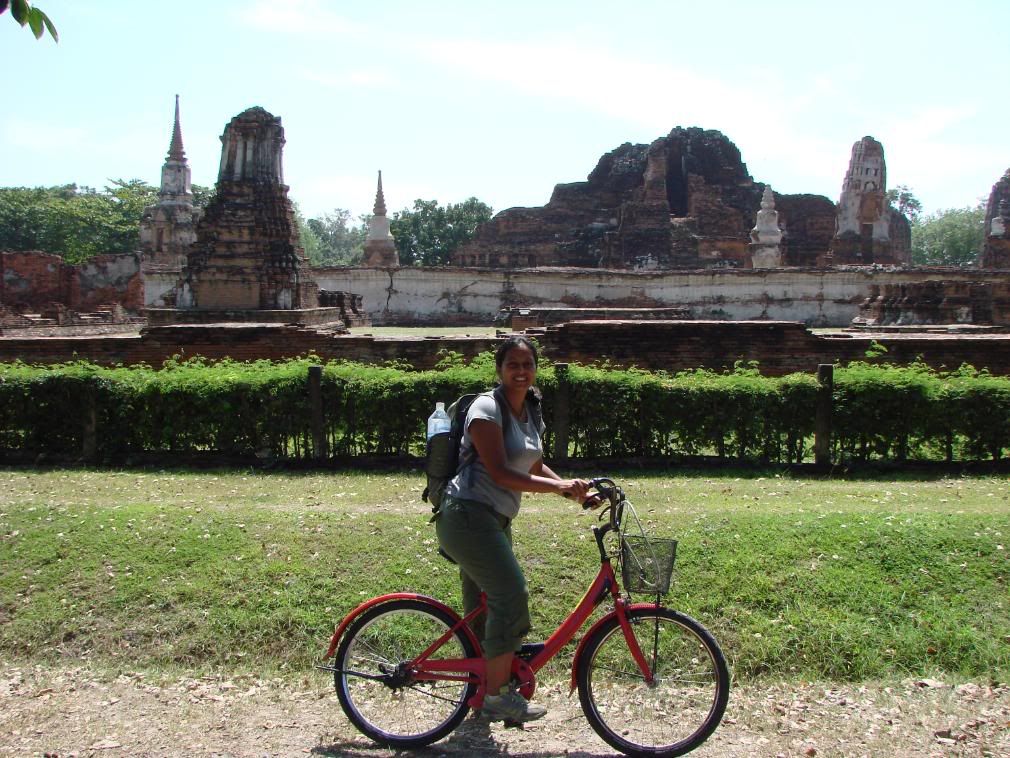 After arriving a bit dusty from the open train windows, we enjoyed refreshing watermelon shakes (Priti’s favorite in Thailand) and did a night Wat tour. The temples, from the 13th and 14th century, glowed a pinkish red as the sun was setting. We also went to an elephant camp where they bred Thai elephants and prevent them from being poached. Jason got a kick out of seeing two of the elephants attempting to mate. Check out the video but be forewarned, it’s not PG13 (to be posted soon) and will put every single male to shame.
After arriving a bit dusty from the open train windows, we enjoyed refreshing watermelon shakes (Priti’s favorite in Thailand) and did a night Wat tour. The temples, from the 13th and 14th century, glowed a pinkish red as the sun was setting. We also went to an elephant camp where they bred Thai elephants and prevent them from being poached. Jason got a kick out of seeing two of the elephants attempting to mate. Check out the video but be forewarned, it’s not PG13 (to be posted soon) and will put every single male to shame.The following day, we rented bikes and visited many of the same ruins from the night before. One of the highlights was this ancient tree with the face of Buddha carved into it. Sadly, many of the statues were headless, as over time various invaders decapitated them in an effort to suppress the Buddhist faith. 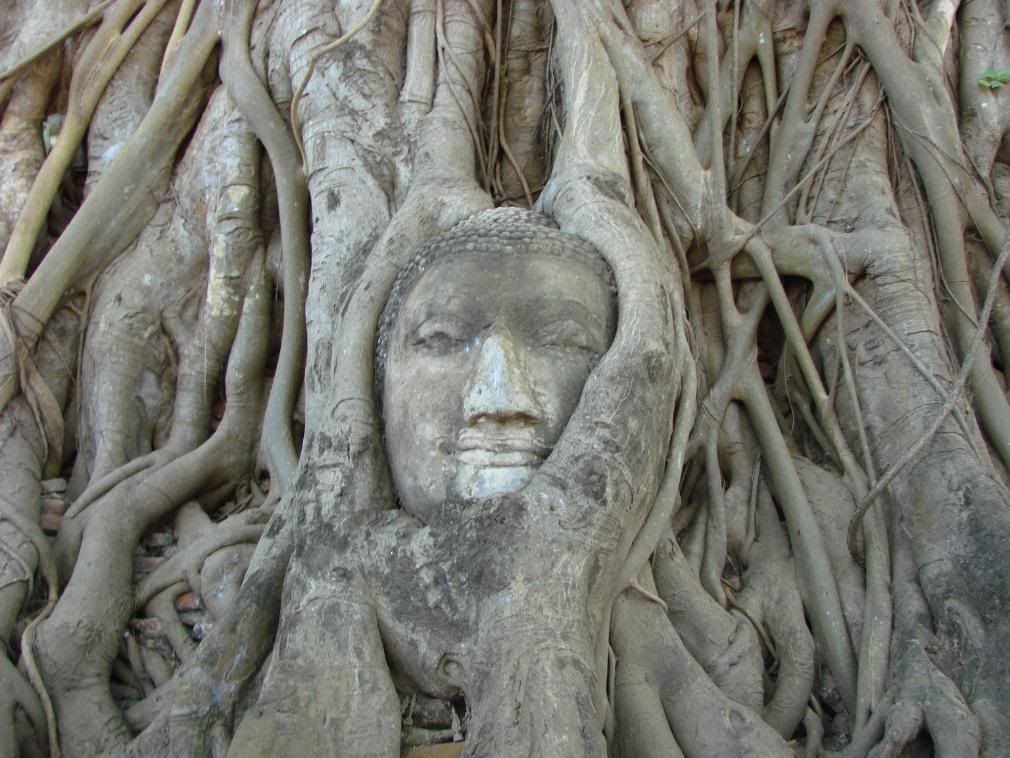 We also went to a museum in town where we learned that Buddhist children are supposed to get their hair shaved at the age of one month to indicate that they survived the hardest month. They get their heads shaved again at the age of 11 if girl and age 13 if boy, before puberty. There are also rituals for a woman when she gives birth, about cleansing herself daily for a certain number of days. There was way too much information, but it definitely sparked an interest to learn more about Buddhism and Thai traditions.
We also went to a museum in town where we learned that Buddhist children are supposed to get their hair shaved at the age of one month to indicate that they survived the hardest month. They get their heads shaved again at the age of 11 if girl and age 13 if boy, before puberty. There are also rituals for a woman when she gives birth, about cleansing herself daily for a certain number of days. There was way too much information, but it definitely sparked an interest to learn more about Buddhism and Thai traditions. We then headed for the train station. Since everything was in written in Thai, it was challenging figuring out which train to get on. However, it was even more challenging trying to get off. Our train was supposed to arrive in Phitsanulok at 8:30 pm and around that time, it made a stop. Having no clue what the signs said, we got off and fortunately showed our ticket to the train station worker, who immediately started shouting and ushered us back onto the train. 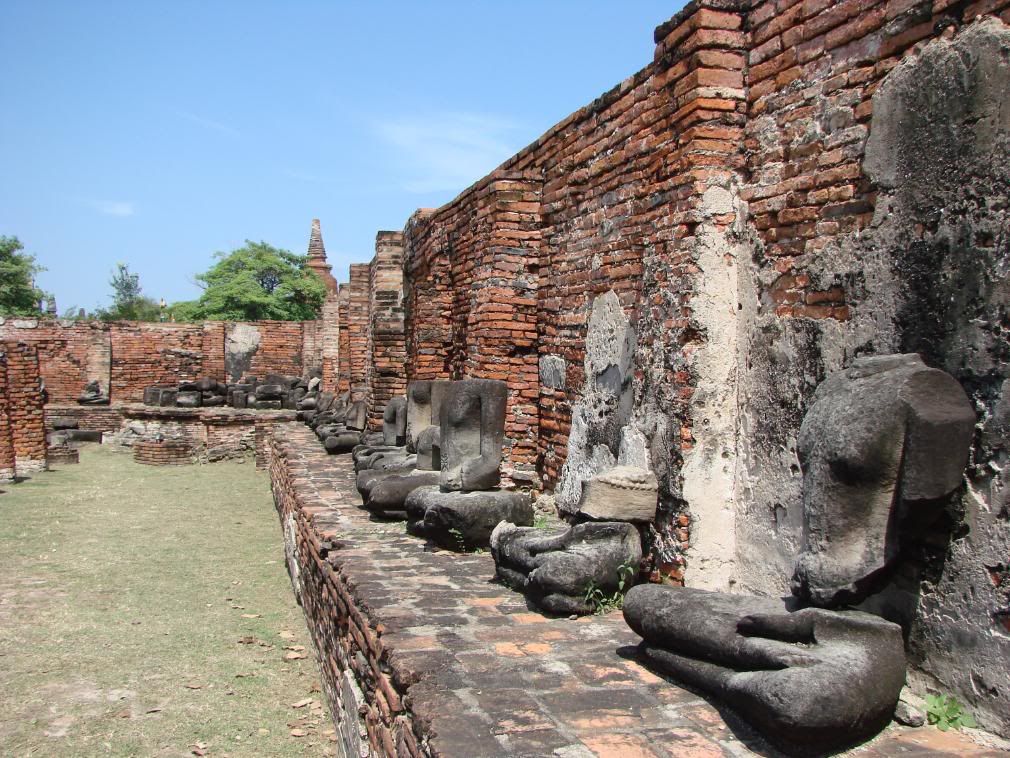 Priti was on the stairs trying to get her bag through the narrow doorway. Jason was shouting for her to hurry as he gripped the handles and felt the ground start to move beneath his feet. He got on just in the nick of time and after our heart-rates returned to normal, we laughed at our near-miss. With the aid of a few other Thai passengers (despite one elderly woman who completely turned around and faced the window when Jason sat next to her) we arrived in Phitsanulok (or “Pee-loc” as the locals call it) 90 minutes tardy. It took us awhile to find a place so we were famished by the time we got to the night market. Perhaps it was our empty bellies but the food was excellent; Thai noodle soup, a spicy pork dish and for desert these dime sized pancakes with a sweet, gooey cream filling. Our hotel actually had a TV with English speaking channels and having not watched TV in so long, we stayed up late watching some really dumb movie with Jennifer Aniston and Clive Owen. (Jason stares at this last sentence in horror).
From Philok, we took a day trip to the Old City in Sukhothai. After renting bikes, we leisurely went around the ancient ruins. Cows, buffaloes, and stray dogs roamed amongst the temples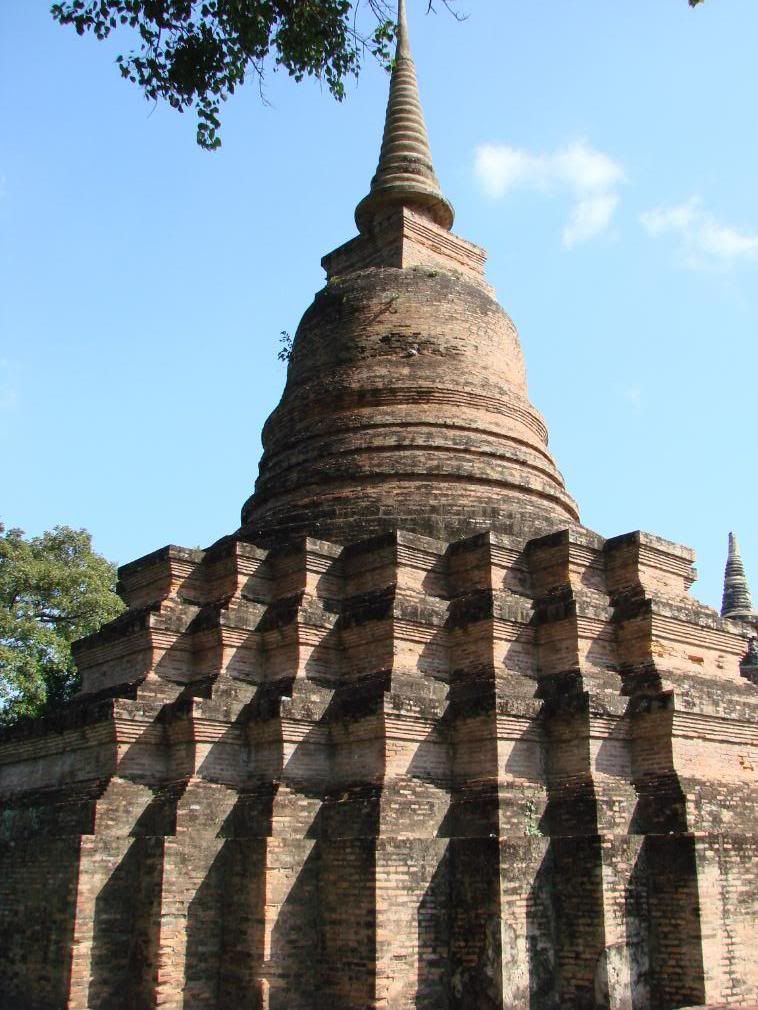 which were serene and partly crumbled. Three female Buddhist nuns dressed in white and one male Monk dressed in orange were doing a walking mediation around the lake surrounding the ruins. It was very peaceful. We had definitely escaped the chaos of Bangkok. The escape didn’t last too long since we had to return to Philok where a tuk-tuk driver tried to drop us off far from our location and then demanded to be paid a larger sum than the one agreed upon to take us to our actual destination. Fortunately, a group of local teenagers got into the tuk-tuk and negotiated for us to get to the riverside where we dined on disappointing Thai food. In retrospect, we should have skipped Ayutthaya because they are very similar but Sukhothai was nicer.
The next day was another day on the bus to Chiang Mai, a northern city known for its many wats, tasty cuisine, and village trekking.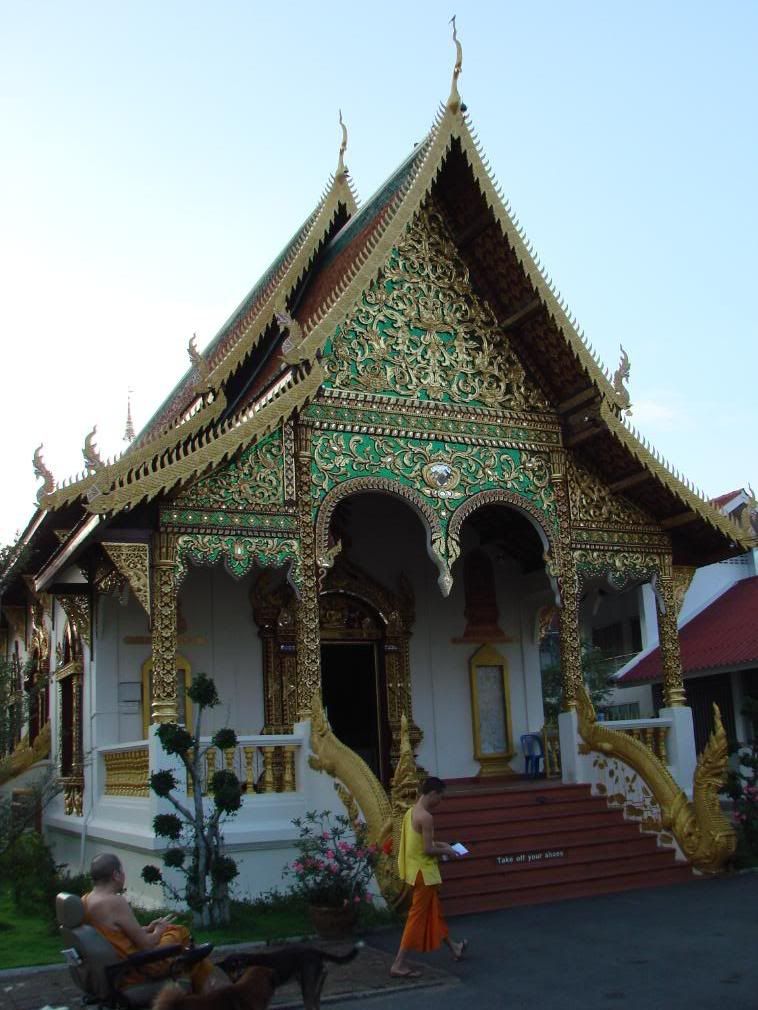 Not surprisingly, the first guesthouse we checked out said they had no available rooms yet changed their tune when we mentioned being interested in trekking. Through another agency we booked a 3day/2night tour of trekking, swimming in waterfalls, visiting villages and interacting with the villagers to learn about their culture, and elephant trekking in the jungle. The tour started off on the wrong note when we showed up the next morning to a closed tour agent. We wondered if we had been scammed again but finally the tour agent appeared and we were ushered around town, picking up more and more passengers until we were practically sitting on top of one another. The tour agent had lied about the maximum number of people. We endured the uncomfortable and cramped ride, first to a local market, and then to the rainforest where we hiked for a few hours, swam in a waterfall pool, and then reached a hilltribe village. Our interactions with the villagers were short lived and thoroughly disappointing. The children ran over to us with woven bracelets in their hands, shoving them into our faces and saying, “10 Baht.” When the tourist would hand over the 10 Baht ($.30), it would quickly disappear and the price suddenly jumped 10-fold. Apparently the 10 Bahts were just a down payment. Similarly, the adults tried to peddle their various wares. As soon as all the sales were made, the villagers vanished and were not seen again.
 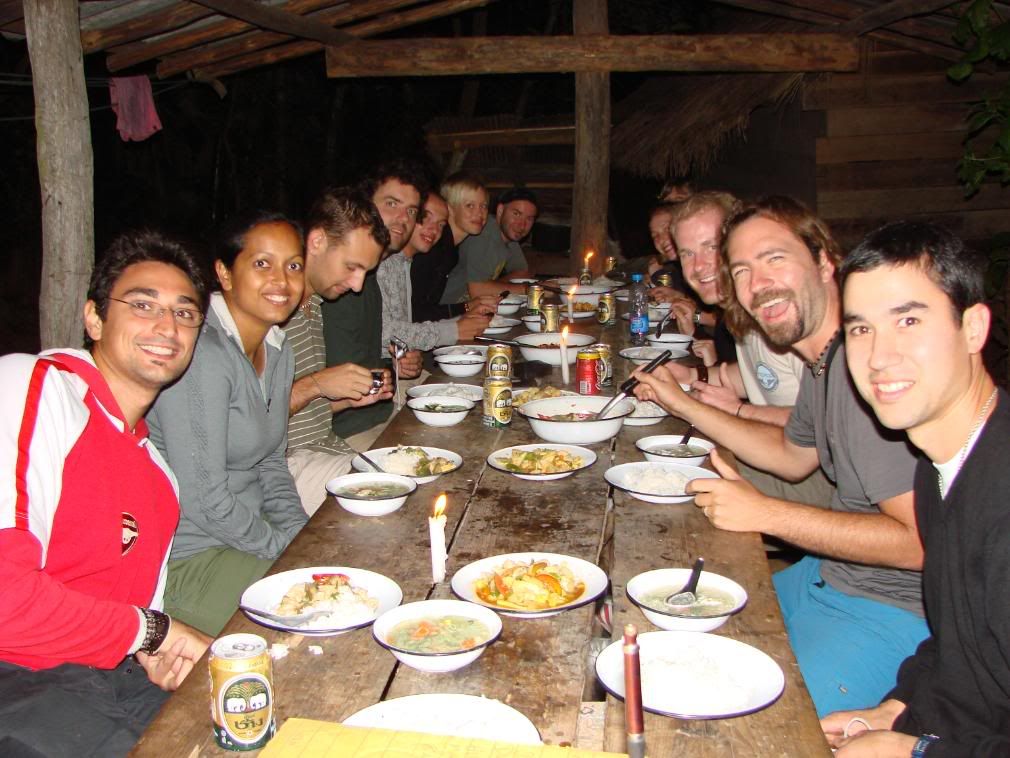 That night, we enjoyed a good Thai meal and hung around the fire, chatting with the other tourists who were all European. Then we slept in a large bamboo and wood stilt building that had elevated platforms on which bamboo mats were spread. The sleeping arrangements were communal with mosquito nets to separate individuals. The bamboo mats were flat without any cushioning and we had to use one of the two blankets to prevent getting sores on our hips and buttocks while sleeping. Priti slept with long underwear, a wool sweater, wool hat and gloves. Despite all the wool, she thought it was cold and worse than camping in a tent in the winter. Jason's night was even worse, as he was forced to repeatedly use the bathroom, which consisted of a disgusting outhouse with a squatting toilet. We could never live in a village.
Priti was on the stairs trying to get her bag through the narrow doorway. Jason was shouting for her to hurry as he gripped the handles and felt the ground start to move beneath his feet. He got on just in the nick of time and after our heart-rates returned to normal, we laughed at our near-miss. With the aid of a few other Thai passengers (despite one elderly woman who completely turned around and faced the window when Jason sat next to her) we arrived in Phitsanulok (or “Pee-loc” as the locals call it) 90 minutes tardy. It took us awhile to find a place so we were famished by the time we got to the night market. Perhaps it was our empty bellies but the food was excellent; Thai noodle soup, a spicy pork dish and for desert these dime sized pancakes with a sweet, gooey cream filling. Our hotel actually had a TV with English speaking channels and having not watched TV in so long, we stayed up late watching some really dumb movie with Jennifer Aniston and Clive Owen. (Jason stares at this last sentence in horror).From Philok, we took a day trip to the Old City in Sukhothai. After renting bikes, we leisurely went around the ancient ruins. Cows, buffaloes, and stray dogs roamed amongst the temples
which were serene and partly crumbled. Three female Buddhist nuns dressed in white and one male Monk dressed in orange were doing a walking mediation around the lake surrounding the ruins. It was very peaceful. We had definitely escaped the chaos of Bangkok. The escape didn’t last too long since we had to return to Philok where a tuk-tuk driver tried to drop us off far from our location and then demanded to be paid a larger sum than the one agreed upon to take us to our actual destination. Fortunately, a group of local teenagers got into the tuk-tuk and negotiated for us to get to the riverside where we dined on disappointing Thai food. In retrospect, we should have skipped Ayutthaya because they are very similar but Sukhothai was nicer.The next day was another day on the bus to Chiang Mai, a northern city known for its many wats, tasty cuisine, and village trekking.
Not surprisingly, the first guesthouse we checked out said they had no available rooms yet changed their tune when we mentioned being interested in trekking. Through another agency we booked a 3day/2night tour of trekking, swimming in waterfalls, visiting villages and interacting with the villagers to learn about their culture, and elephant trekking in the jungle. The tour started off on the wrong note when we showed up the next morning to a closed tour agent. We wondered if we had been scammed again but finally the tour agent appeared and we were ushered around town, picking up more and more passengers until we were practically sitting on top of one another. The tour agent had lied about the maximum number of people. We endured the uncomfortable and cramped ride, first to a local market, and then to the rainforest where we hiked for a few hours, swam in a waterfall pool, and then reached a hilltribe village. Our interactions with the villagers were short lived and thoroughly disappointing. The children ran over to us with woven bracelets in their hands, shoving them into our faces and saying, “10 Baht.” When the tourist would hand over the 10 Baht ($.30), it would quickly disappear and the price suddenly jumped 10-fold. Apparently the 10 Bahts were just a down payment. Similarly, the adults tried to peddle their various wares. As soon as all the sales were made, the villagers vanished and were not seen again. That night, we enjoyed a good Thai meal and hung around the fire, chatting with the other tourists who were all European. Then we slept in a large bamboo and wood stilt building that had elevated platforms on which bamboo mats were spread. The sleeping arrangements were communal with mosquito nets to separate individuals. The bamboo mats were flat without any cushioning and we had to use one of the two blankets to prevent getting sores on our hips and buttocks while sleeping. Priti slept with long underwear, a wool sweater, wool hat and gloves. Despite all the wool, she thought it was cold and worse than camping in a tent in the winter. Jason's night was even worse, as he was forced to repeatedly use the bathroom, which consisted of a disgusting outhouse with a squatting toilet. We could never live in a village.The next morning, we had a minimalist breakfast of toast, butter, and jam with tea or coffee while the locals and guides ate hearty, warm noodle soup. We were jealous. One of the other travelers was
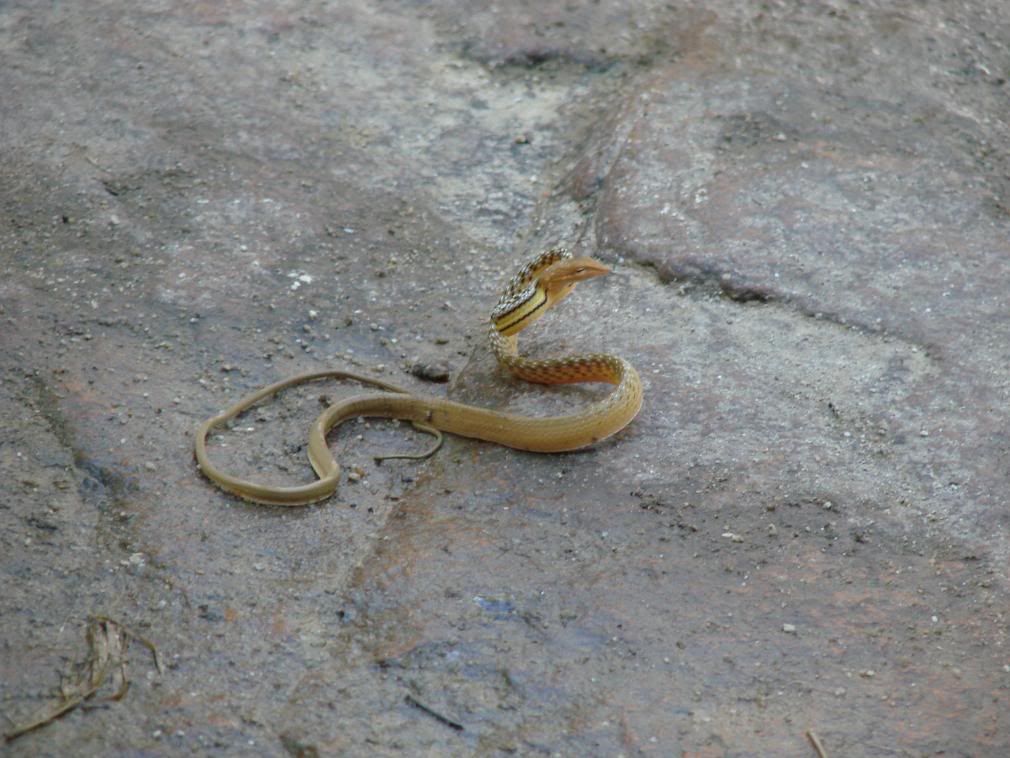 feeling sick, said he was sweating at night, and had GI symptoms. We gave him some Imodium and Tylenol but he clearly wasn't enjoying life so he and his girlfriend said they wanted to leave early with those who had booked just a 2-day trek. Our 2night/3day guide initially asked them why they hadn’t told him at the village where he could have called and arranged the elephant trekking and bamboo rafting for them that day. He also said that it might not work out for them and almost insisted that the Danish continue trekking, even after they promised not to ask for a refund. Only after they put it in writing did the guide relent and let them leave early.
 After settling that, our group of eight people hiked for about 4-5 hours. We reached a waterfall where we had lunch that consisted of fried noodles wrapped in banana leaves. Our guide made chopsticks out of a bamboo stalk that he cut from the forest. It was great that our “plates and utensils” were disposable and environmentally friendly. Along with the guide and Daniel, from Germany, Jason jumped off a cliff into the waterfall pool.
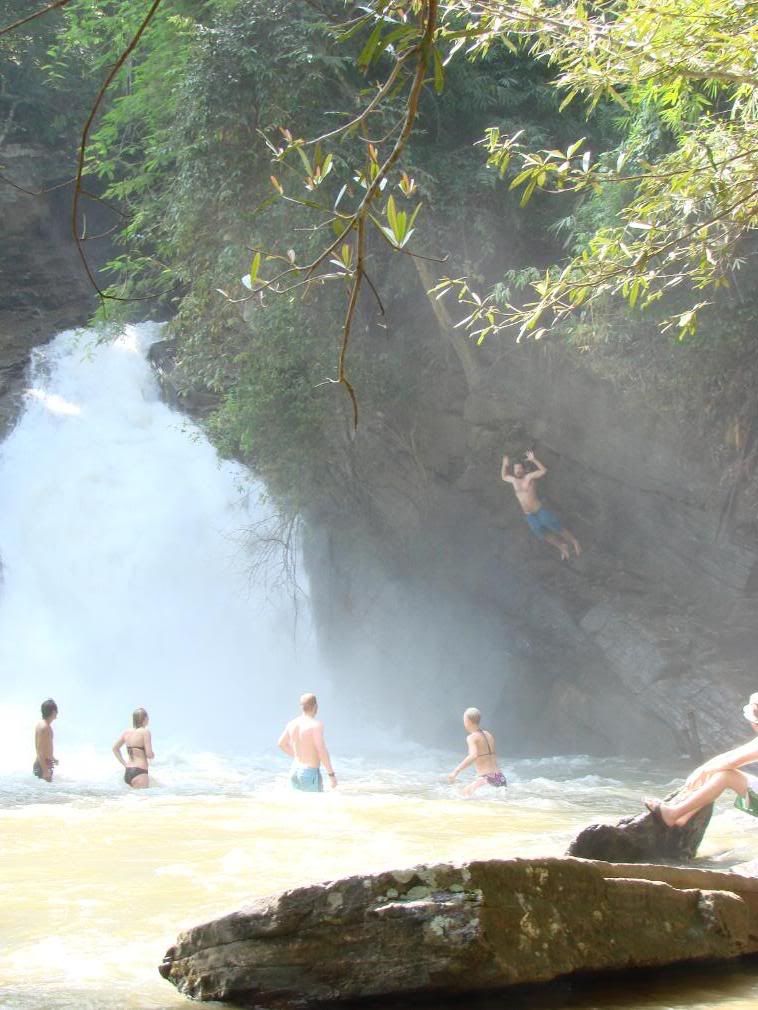 The water was very strong and the jumpers tried in vain to walk in the pool towards the waterfall, only to be pushed back by the current. We then hiked to the next village during which we didn’t interact with any village people. However, there were 3 really cute puppies that were probably 2-3 weeks old. We had fun playing with them. At this village, they were in the process of building individual huts some of which had been completed. Jason and I opted for our own hut with a private Western toilet and a real bed instead of another night in the communal hut on top of bamboo mats. We had a great meal of red curry fish and some amazing curried pumpkin with rice. The fish was still alive right before dinner and was de-scaled and gutted...yum!
Priti woke up feeling tired and it was painful for her to swallow. She started to get a burning sensation at mid-sternum without any relief from taking antacids. She endured through breakfast. We then walked for an hour or so and got to the elephant trekking. It really wasn’t elephant trekking, rather a big loop through the mud. We felt like backpacks and nearly got sick from the violent lurching throughout the 45 minute ride. Jason didn’t like it whatsoever and said he would never go on an elephant again. We then had a pretty bland lunch of noodles.
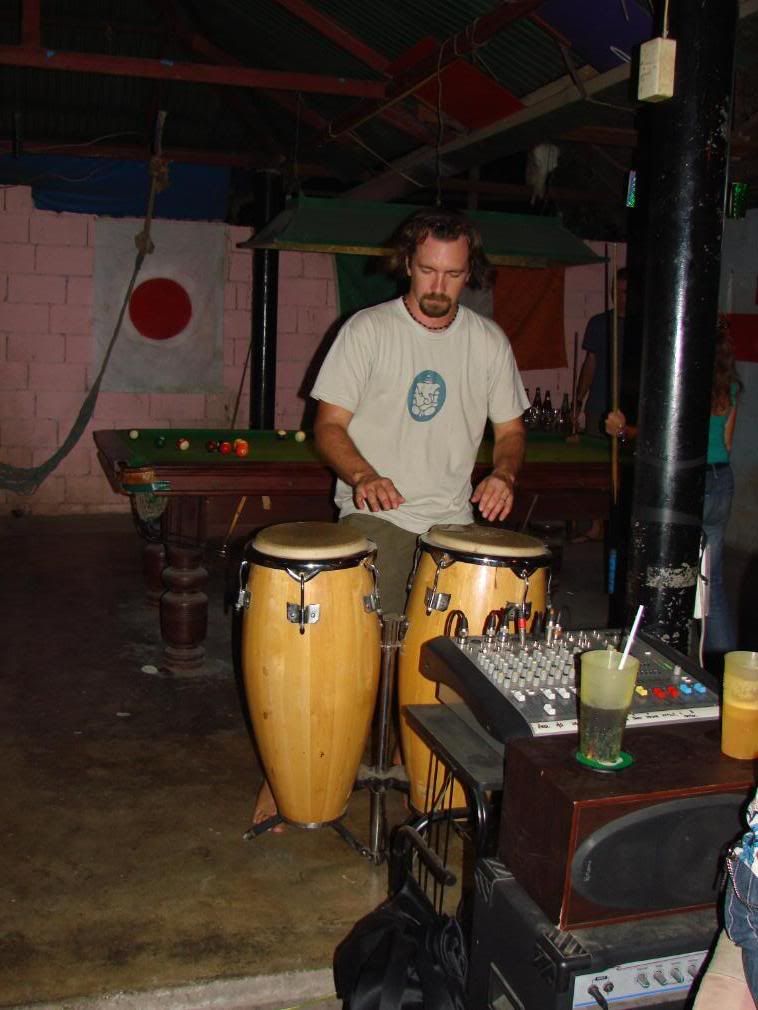 Our final activity was bamboo rafting. There were two bamboo rafts and Daniel and Jason got into a friendly rivalry, which resulted in Daniel falling into the water and breaking their teams bamboo steering rod. Ha ha. That night we met our trekking group at a good steak buffet for dinner, drinks, and dancing. We had fun dancing. Jason was in his own groove and even played bongos with the band.
The next day was slow and uneventful. Jason's GI symptoms persisted, as did Priti's heartburn symptoms. We managed to see a couple of wats and also scheduled a one day cooking course at the famous Chiang Mai Thai Cookery School. When shopping around for cooking schools, the clincher for this one was that the man who taught the class was a famous Thai TV chef. He walked into the office, we looked at the back cover of the cookbook, raised our eyebrows and the woman trying to sell us the class, said, “Yes, that’s him.”
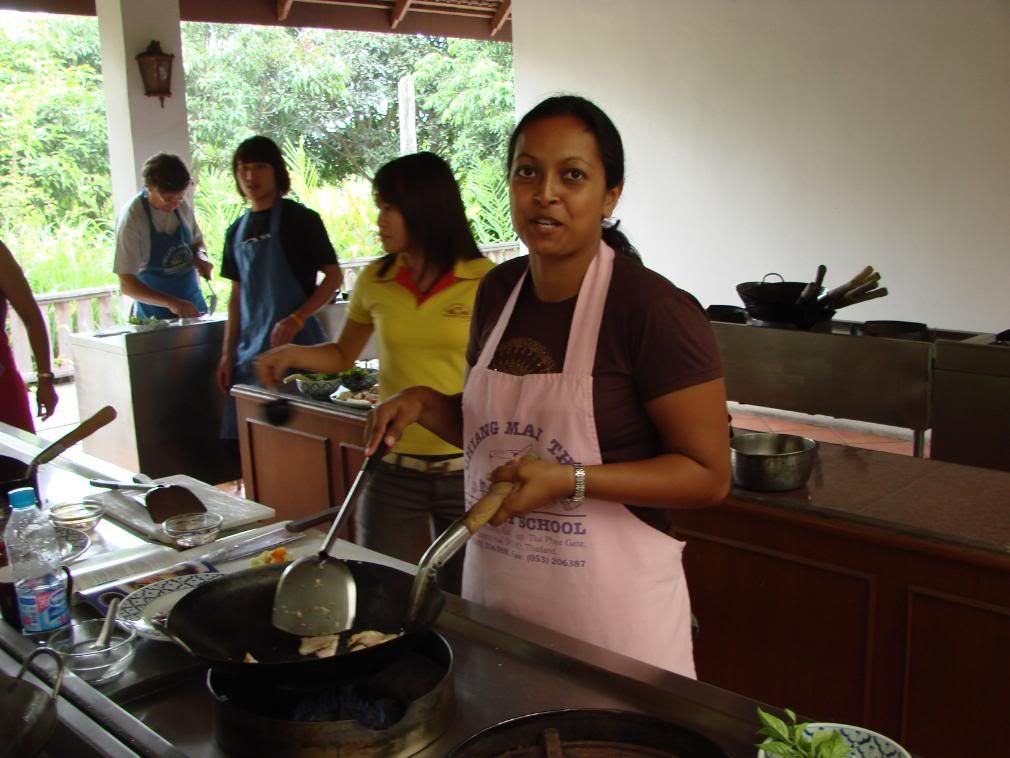 Despite our maladies, we went to the class and made the best spicy Thai food ever, 6 dishes including a desert of steamed banana cake. The entertaining chef tasted Priti’s Tom Kha soup with the tip of his pinky finger and shrugged his shoulders. Although she liked her food, Jason’s was (shockingly) better. We now know who will be doing the Thai cooking when we return home.
 After a full day of eating, we relaxed and enjoyed Thai foot massages followed by a night out with friends from our trek. Priti, unfortunately, continued to eat antacids during the night as her heartburn kept getting worse. She abstained from any alcohol since it exacerbates the symptoms. The following morning, after doing some research on the internet, she figured out what medicine to take and bought some at the Australian pharmacy chain sans prescription. We then headed for the small mountain town of Pai with a population of a few thousand. The drive was amazing and luckily we don’t get car sick.
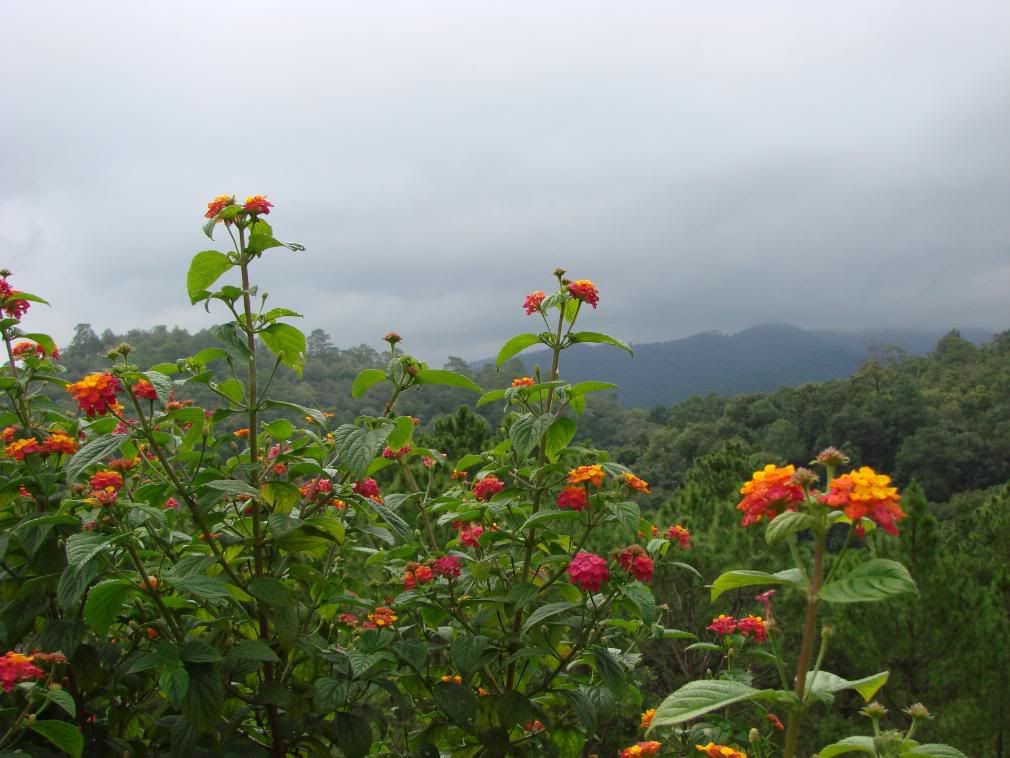 The curving roads up the mountains would send us back and forth in our seats. Looking out the windows all you could see were green trees covering misty mountains...similar to Colorado. We arrived in Pai and found a room on the river. This particular guesthouse is famous for having treehouse rooms, but unfortunately those were all occupied. We headed out and were quickly surrounded by yippies (i.e., young lost souls with money but dressed like hippies). The social atmosphere was thus not quite what we had hoped for although the street food was excellent, according to Jason. Priti, by this time, wasn’t eating anything spicy (which was mostly everything available) or any citrus fruits. She had one banana all day and wondered how people could willingly fast for extended periods. It hurt for her to even drink water. Although we were in Pai for a short time, we would see a handful of the same people later in Laos, although our paths were very divergent, as we'll explain in the next entry.
 The next morning, at the hour of 8:30am, we decided to catch the 9 am minibus back to Chiang Mai so Priti could visit a doctor. We went to the hospital in town which was recommended by our travel insurance. Priti hadn’t been able to eat for two days and the heartburn wasn’t improving. Although she had done research on the internet, she also knew that she shouldn’t treat herself and the deferred pain from midsternum to her left arm freaked her out. Thailand is known to have one of the best medical and dental systems in Southeast Asia and it was the most efficient medical service we have ever seen. She was ushered by staff from one place to the next – person who had her fill out papers, nurse who checked vitals, doctor, payment for chest x-ray prior to chest x-ray, Priti read chest x-ray while walking to doctor’s office, doctor who read chest x-ray, pharmacy for meds – all within one hour. Priti’s diagnosis – peptic ulcer disease (PUD). The cost of the entire medical visit including the chest x-ray was about fifteen dollars, more than half of which was the x-ray. Although the doctor spoke English, took a good history, and did a focused physical exam, she failed in asking Priti about other medications. Although Priti felt relieved because she had given herself the same diagnosis, she also researched our current meds and learned that the prophylactic malarial pill was the likely culprit rather than the spicy Thai food. (She cannot give up Thai food for the rest of her life!) Her symptoms subsided the day after she stopped taking the pills.
The following day, with a six week supply of PUD medications and the unsatisfied cravings for spicy food for Priti, we traveled to the Mekong River village of Chiang Khong where you can cross into the Lao village of Huay Xai. We had been told that Laos today was what Thailand was like 25 years ago (i.e., much fewer tourists) and we were ready for our next adventure.


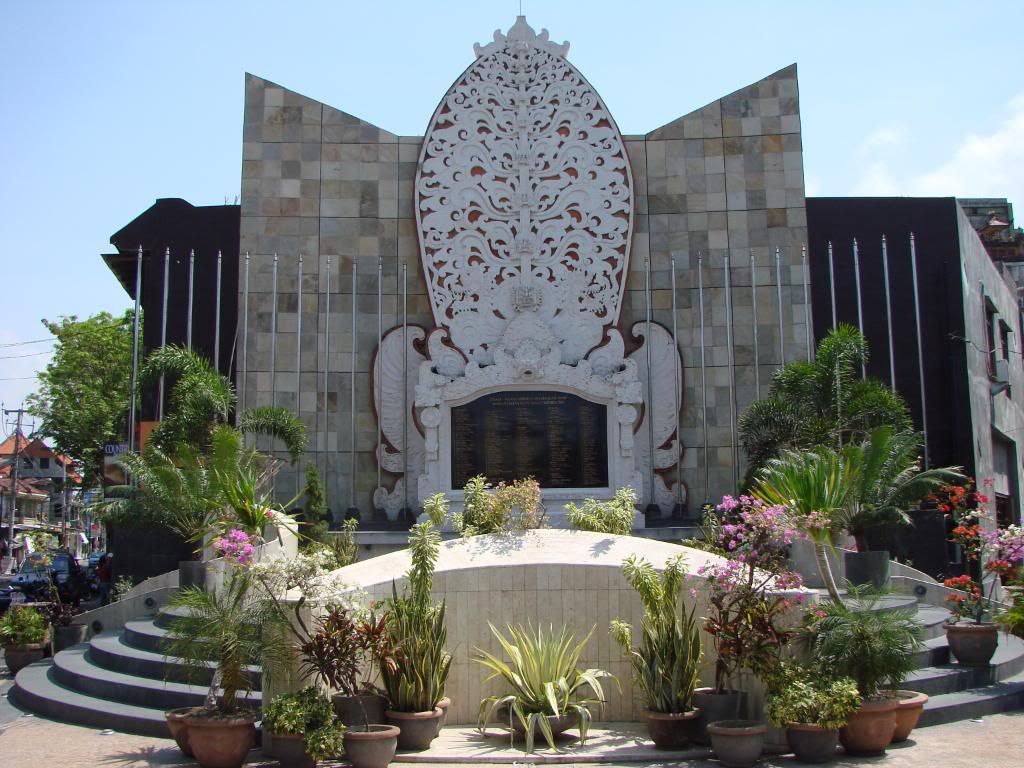 Just over five years ago, on October 12, 2002, extremists exploded a bomb in a Kuta hotel, killing 189 people, including seven Americans. Unbeknownst to us when we booked it, the location of this senseless tragedy was less than 200 meters from our hotel. Today there remains a fenced-off vacant lot, adorned with a handful of remembrances from the victims’ friends and families. Across the street, a memorial lists the victims by nationality. Although we had forgotten the specifics, we remembered hearing about this bombing when it occurred. Upon realizing just how close we were to this horrific scene and not even knowing it, we became pretty emotional. Later on, we would meet someone who had a friend perish in the blast.
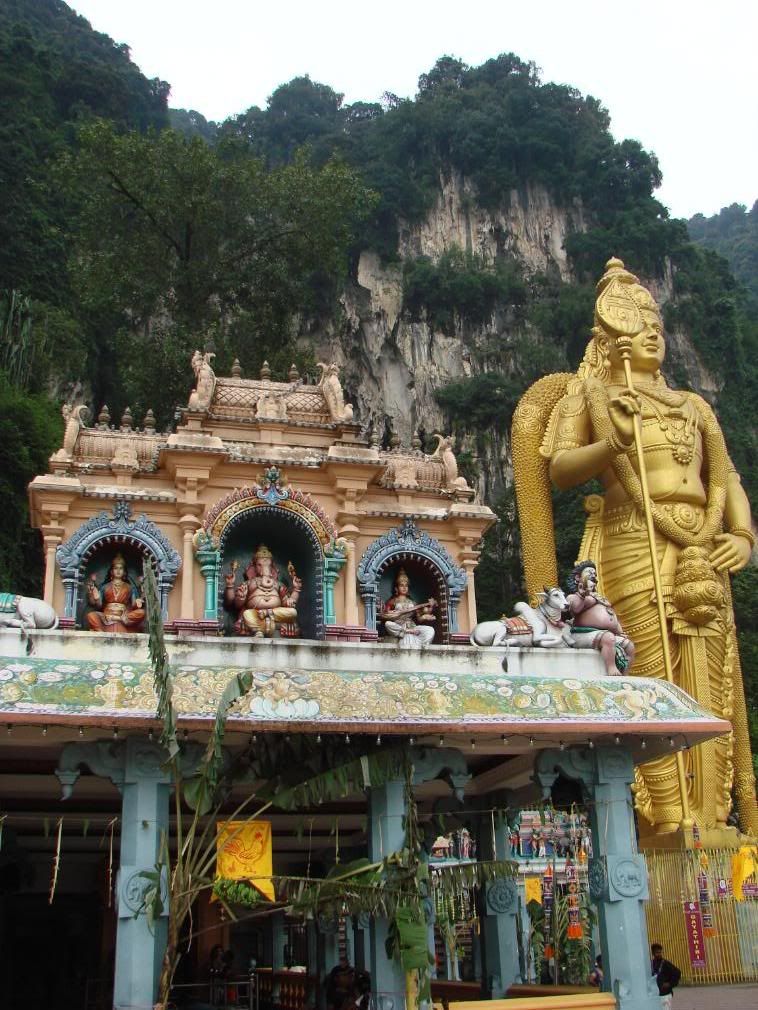
 The next day was spent in recovery, as we both slept throughout the day in our spacious and oh so comfortable bed. After having spent the last week either in tents or dorms, we were completely content just catching up on some z’s. Well rested, the next day we hired a driver, who took us to a parasailing spot. It was a bit disappointing because it lasted only about 5 minutes, but it was just $10. Next we visited this temple with massive statues of a religious figure and a dragon (see Jason cowering below for a sense of scale).
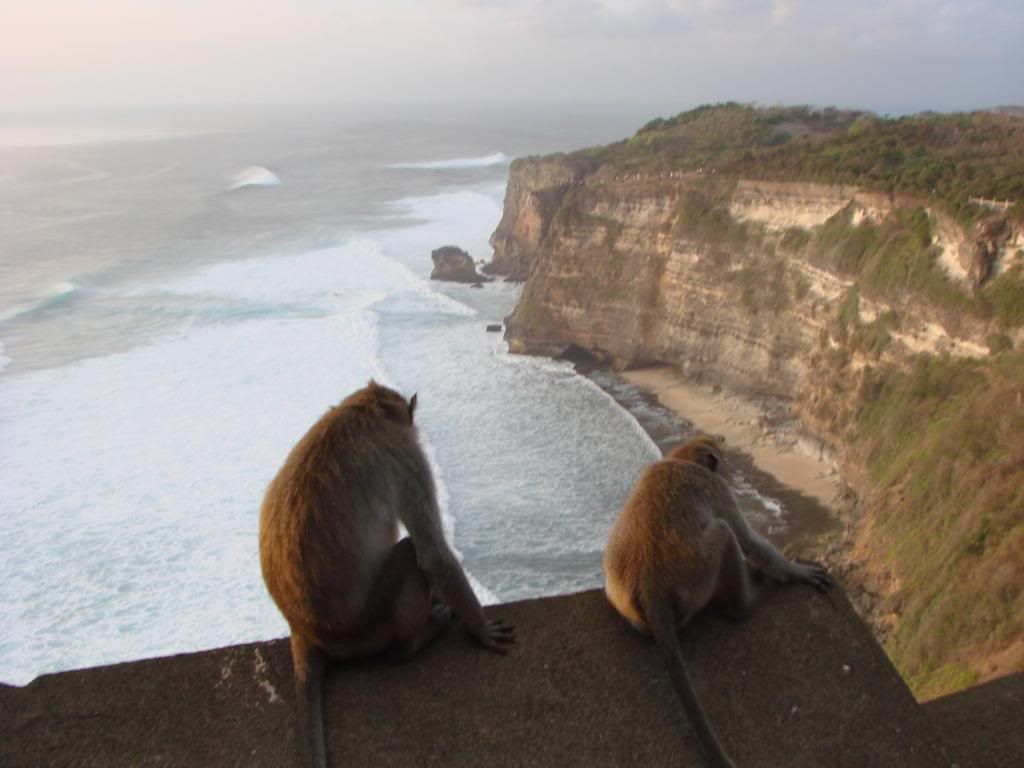
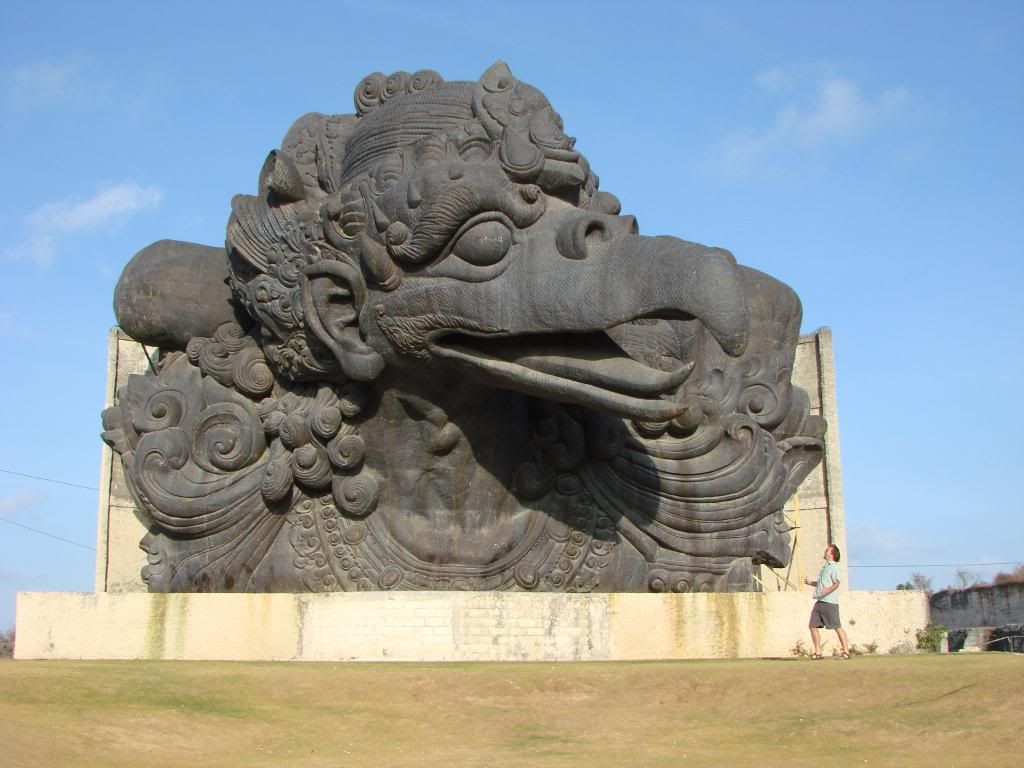 Then it was off to Uluwatu, a famous temple right at the edge of these scenic cliffs, where we caught the sunset with some monkeys and watched a Kecak fire dance depicting the classic Hindu story of Rama and Sita.
 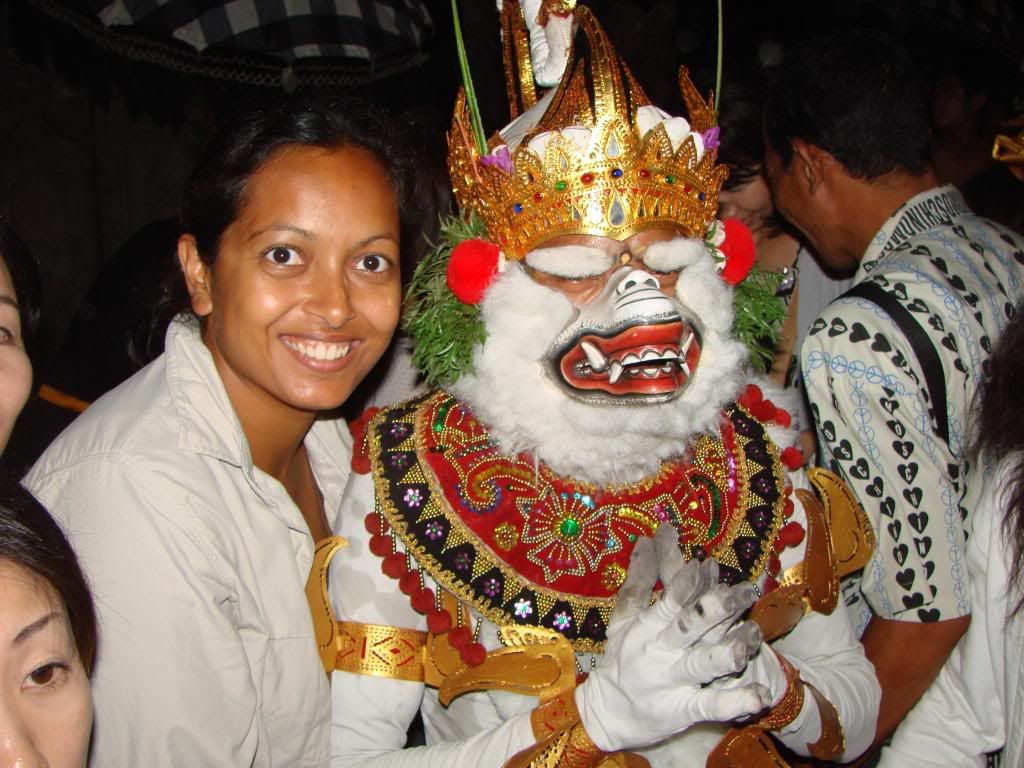 Watching a group of barely clothed men swaying and chanting in rhythm, with the sun setting on the ocean, was definitely a moving experience (see video). Our final stop was Jimbaran, where we enjoyed a romantic seafood dinner on the beach while being serenaded by local musicians with “Something” and “Could You Be Loved?” in broken English.
 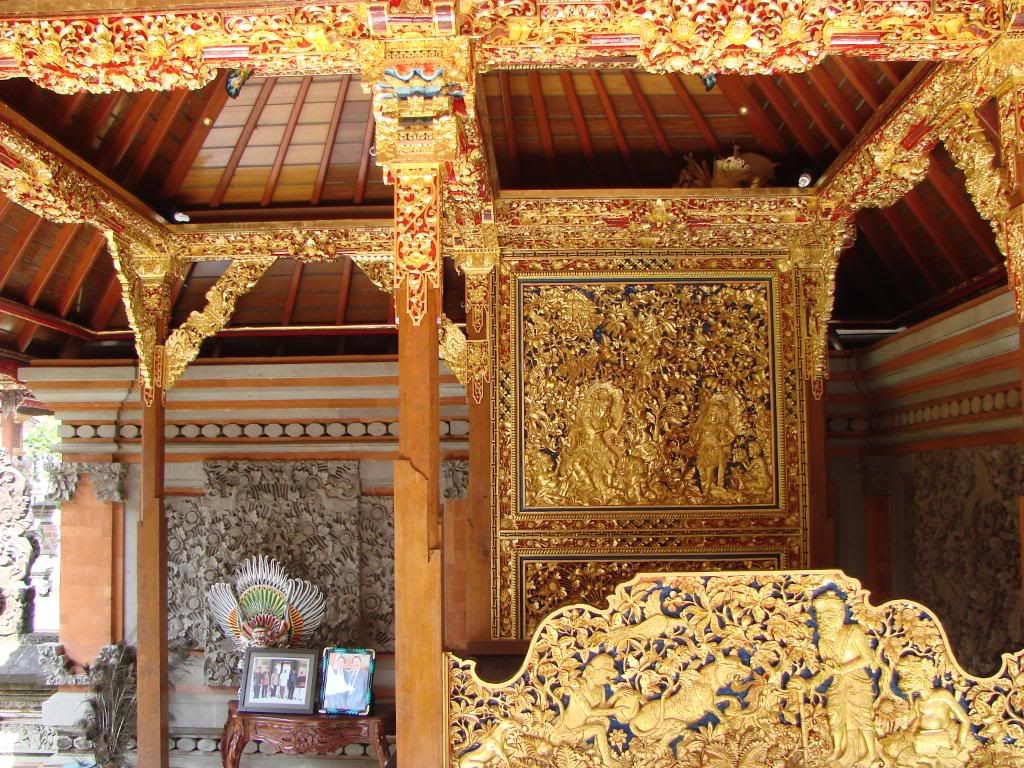 We booked a couple nights and then ventured out to see the town, passing galleries galore, massage parlors, and shops selling clothes, wood carvings, and jewelry. We made our way to the monkey sanctuary, where about 300 monkeys live. We were both glad we hadn’t booked a tour that would’ve given us a set time in the forest because we ended up staying there for about three hours. For dinner, we ventured a bit off the main street to a local warung, and enjoyed a simple but great dinner of mie goreng (fried noodles, meat and veggies) for about $2 each.
 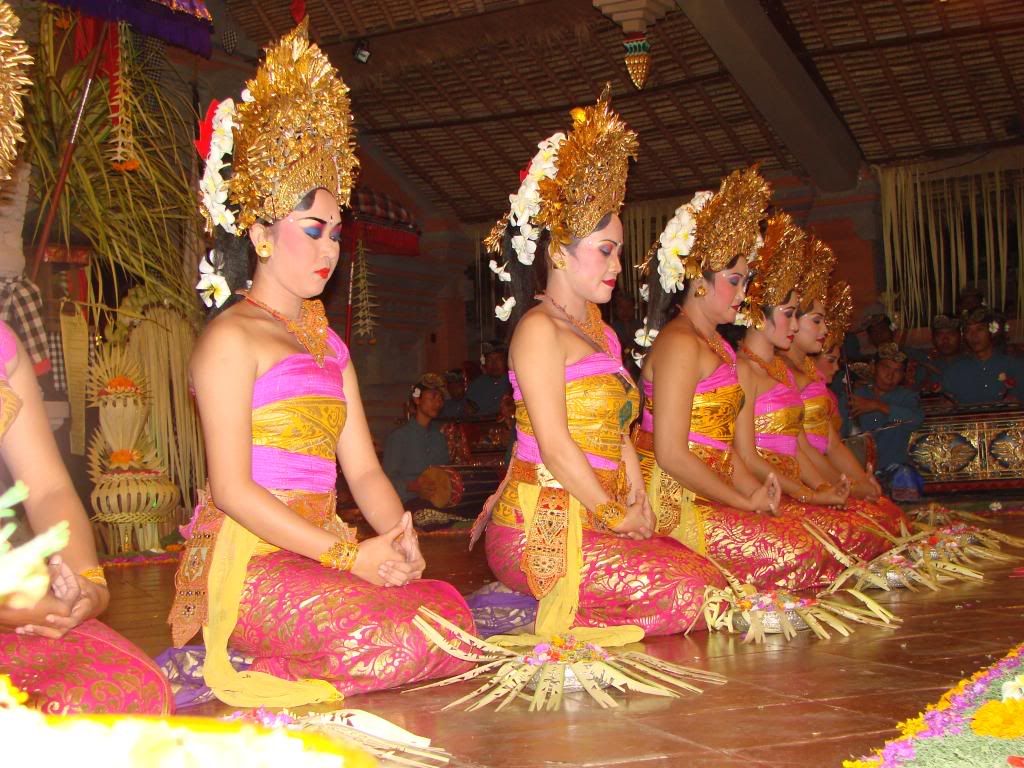 To our ears, which are accustomed to melodies and western rhythms, it initially appeared as noise; however, as we grew acclimated to the structure of the music, it became much more enjoyable. There were also lots of incredible dancers with very striking features. Following the dance show, we ate some great seafood at a restaurant overlooking rice paddies.
 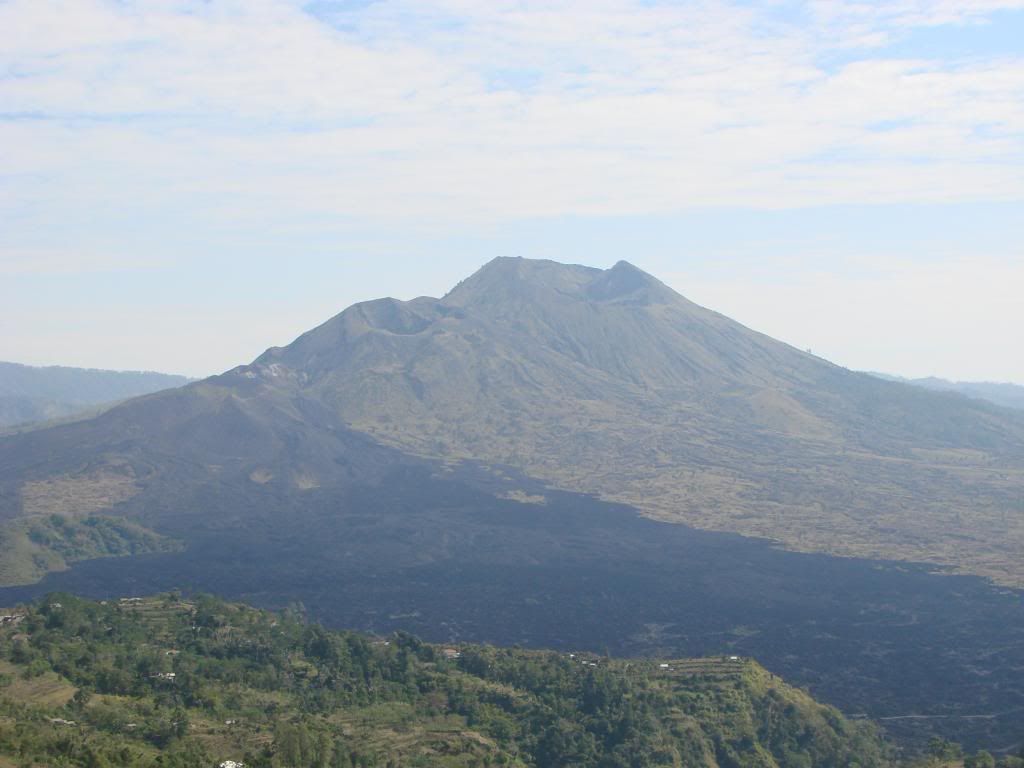 During the drive up, we learned a wealth of information about Bali from our intrepid guide Darma. Now 41 but looking at least a decade younger, Darma had left his banjar, or community, at age 14 to seek an education on the island of Java, Bali’s western neighbor. His first five years in Java were spent in servitude, working from 3:30 am until midnight, as he was too ashamed to inform his family of the extremely harsh conditions under which he was enduring. He eventually saved up enough money to fund his English education, which he pursued over the next five years, again at the absurd hours of 10 pm to 6 am (he slept on the bus). After finishing his studies, he returned home (as the youngest male, as opposed to the more common custom of the oldest male, he is responsible for the caretaking of his parents) and now lives with his extended family of 40 in a compound.
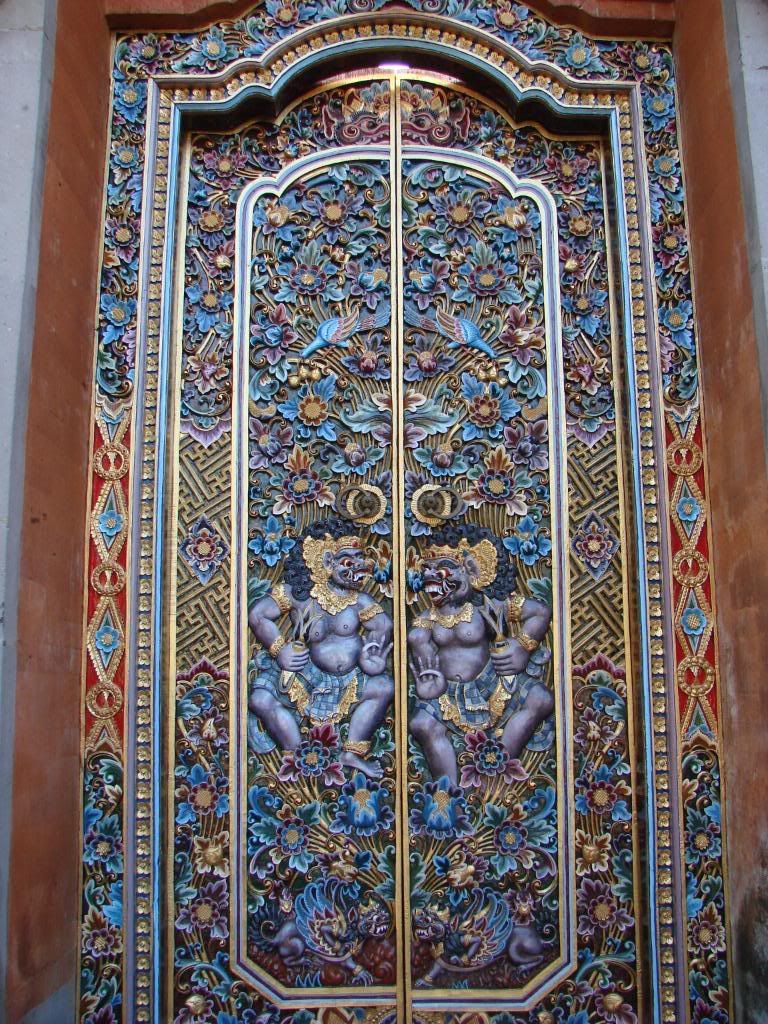 Later in the day, we would visit a compound to see firsthand how he and millions of other Balinese live. Besides his history, Darma described many of the beliefs of the Balinese, who are Hindu but of a very different sort than Indian Hinduism. At its most basic, everything revolves around one’s banjar. This is why a family will willingly accept conditions of abject poverty in order to save up the 30-50 million rupiahs ($3-5K) in order to cremate their dead; not individually but collectively every three to five years (as an individual ceremony would be cost prohibitive)! Some of the underlying beliefs for these seemingly bizarre priorities are the well-known concept of karma, whereby humans are reincarnated based on the quality of their lives. Also, they believe in the separation between sekala (visible world) and the much more important niskala (invisible world) [Jason interpreted this as the equivalent to the notions of the implicate and explicate orders: DO YOURSELF A FAVOR]. Apparently these beliefs are not always enough to keep the people in line, as the banjars can expel a member for not adhering to the rules.
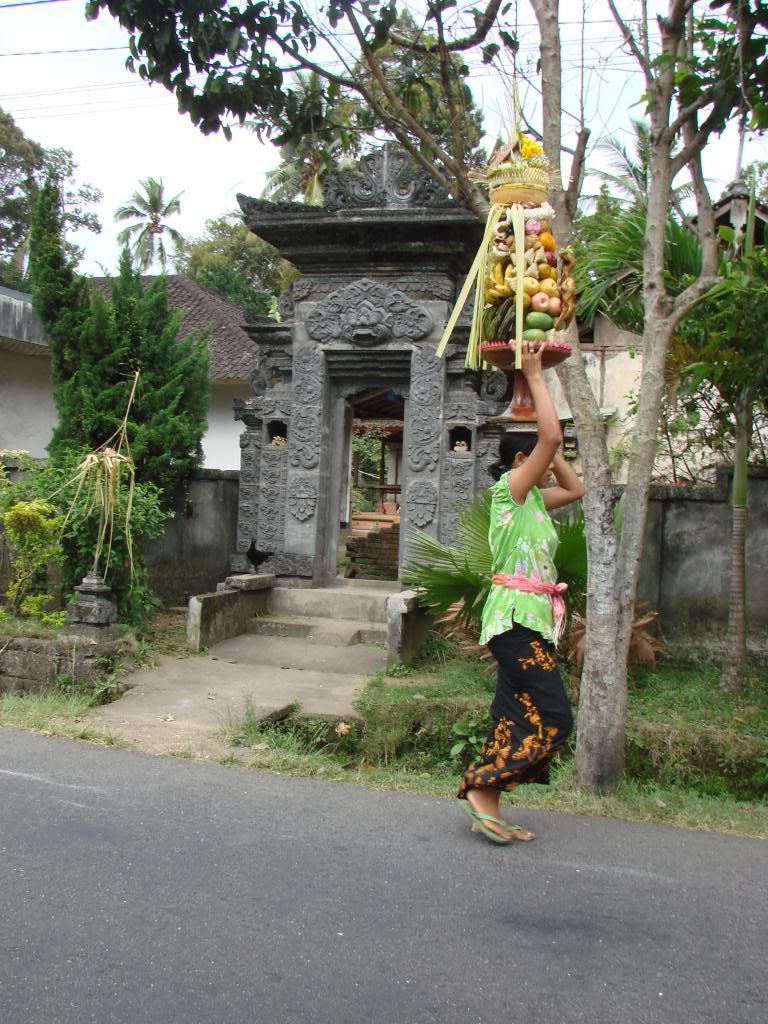 This is no laughing matter as the price of re-entry is a whopping 75-100 million rupiahs ($7500-10K), about 10 years’ salary of the average Balinese. A few other interesting facts about the Balinese: they don’t have surnames, and 1st born children receive one of three names, 2nd born on of three different names, and so on until the 5th child, who gets one of the three names reserved for first-borns (yet another example of the emphasis on banjar rather than the individual); they do not celebrate birthdays (although they do have a six month shaving ceremony) and thus do not know how old they are; during adolescence they have their six canine teeth filed down to be even with the rest of their teeth because they look too savage and represent the six primary sins of lust, greed, anger, drunkenness, confusion, and jealousy.
 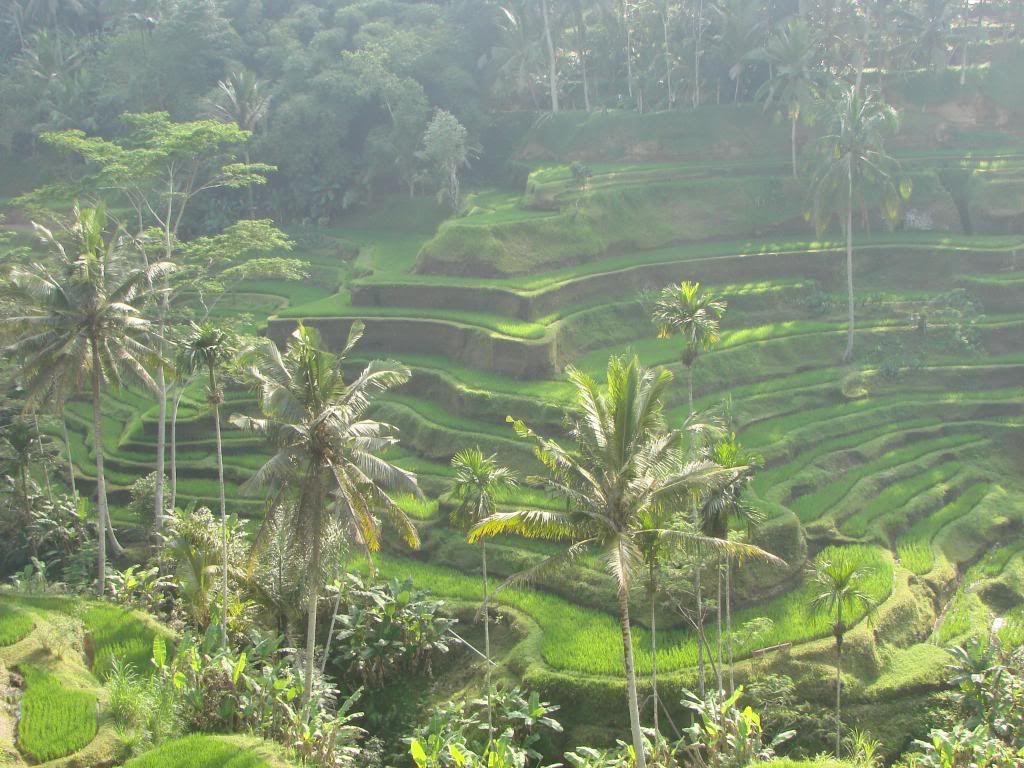 the famous Tegallalang rice terraces that have to be seen to be appreciated; a “plantation,” where we had fresh snakefruit (mix of apple, pineapple and kiwi), hot cocoa, coffee, and cigarettes (from the sweetest tobacco we’ve ever tasted); a family compound whose business was bamboo and whose “bank” was their cow, worth a cool four million rupiah ($400); and a wood carving shop, where a dozen uneducated males created scores of identical “antiques” for the local shops. Throughout the day we also saw dozens of genuinely ancient Hindu temples, many of which were in preparation for ceremonies and thus adorned with colorful vertical ribbons and ornate animals, all made from bamboo. Our final stop was to see another rice field that was near the end of its four-month harvesting process.
 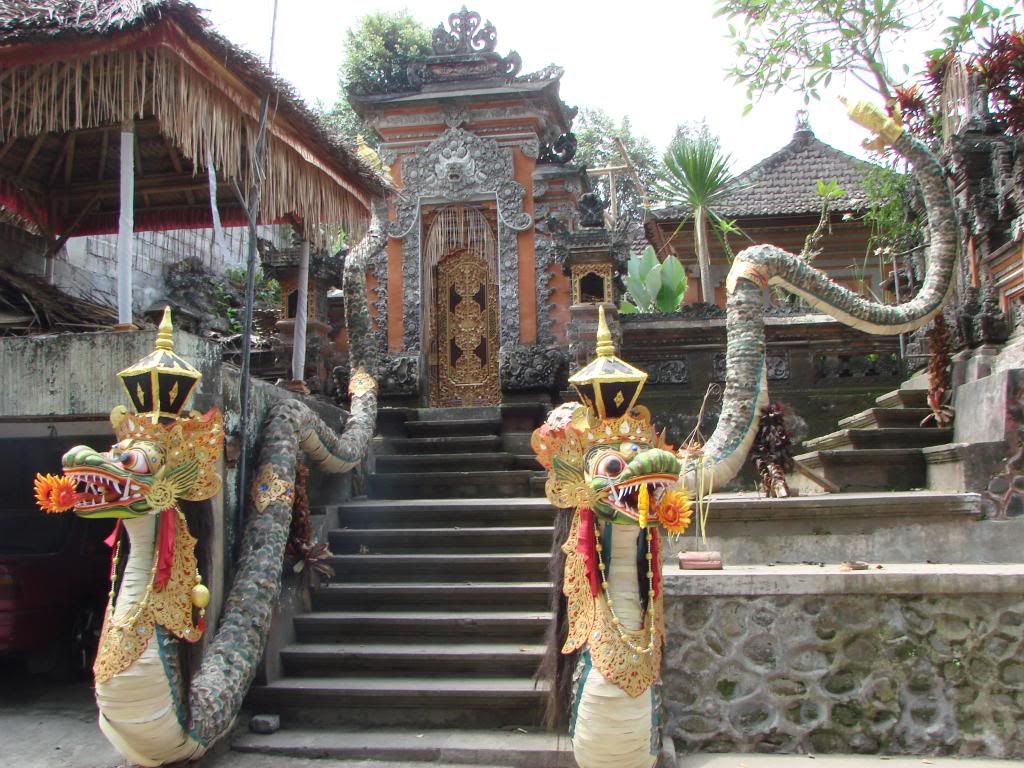 Having eaten rice with every meal over the past week, we did not have to be told how important rice is to the Balinese, but we were astounded to learn that the former Indonesian Prime Minister, Nurdin Halid, had actually imported rice back in the early naughties, and was currently standing trial for this and other malfeasances during his tenure. Perhaps the world would be a better place if all politicians were immediately placed on trial so that we could weed out all the scumbags and start anew with the one percent that made it through the vetting process. We would attach the addendum “save for all of the rat bastard politicians” to the principle of “guilty until proven innocent.” To work off some of his pent-up rage, Jason thankfully got to do some uphill riding while Priti and most of the others followed along in the van. Finally, we were treated to an incredible feast of roasted chicken and duck, satay, fried tofu, nasi goreng (rice, meats & veggies) and the best tempeh (sweet & spicy) we’ve ever tasted. Despite spending an average of $8 per meal for both of us, Balinese cuisine is the best we’ve tasted thus far on our trip.
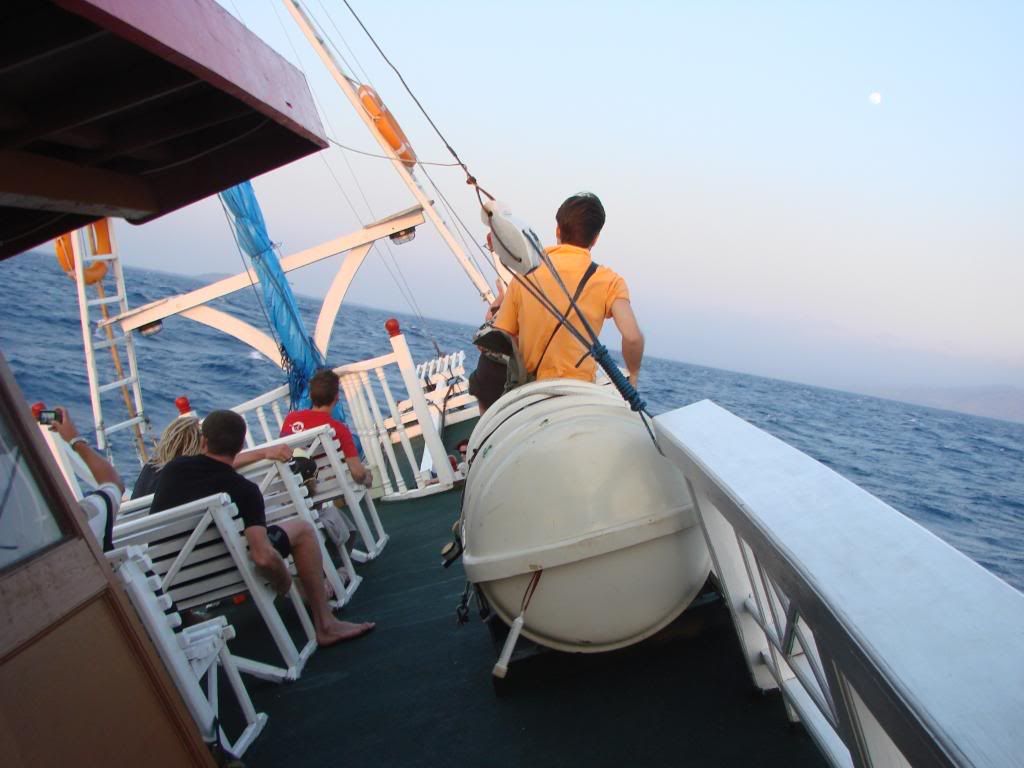 The ride over was pretty crazy because of the choppy conditions. There were several points where the boat seemed to be on the verge of tipping. Priti went inside the cabin and some of the tourists had put on lifejackets while the locals laughed at them. Meanwhile, Jason was hanging out on the side that was closest to the water, obliviously taking pictures. Upon arriving we got a decent room on the beach for $8 and headed out to see the island.
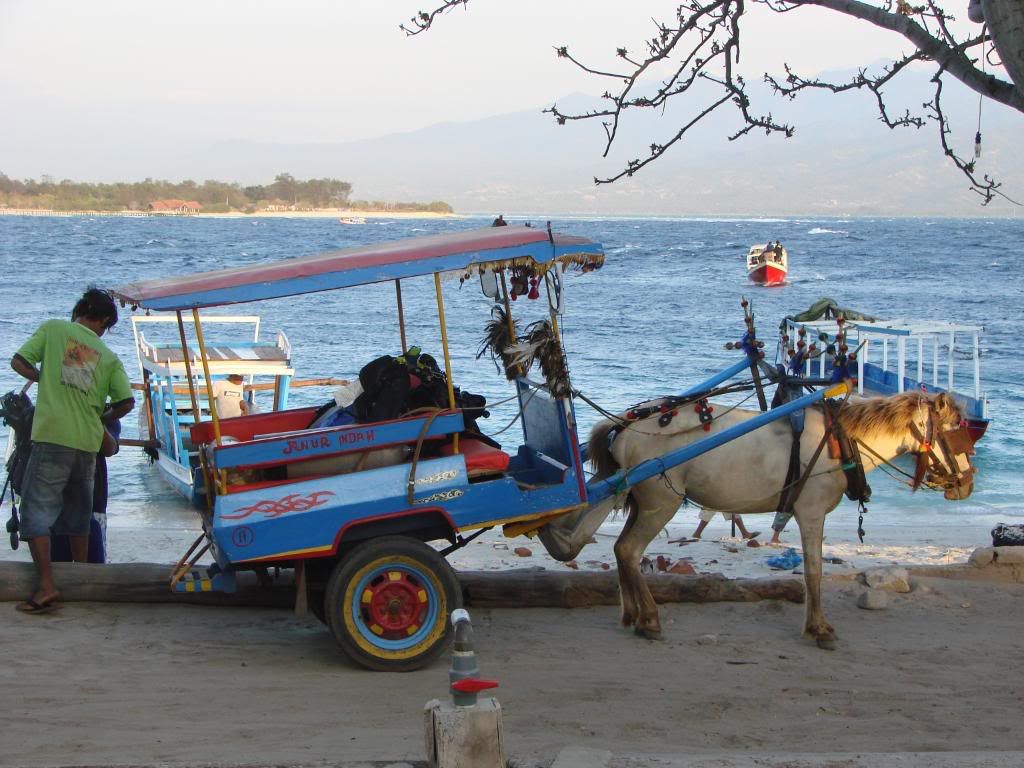 A few things are absent on the island, leading to a very unique atmosphere: 1) cars, 2) police, and 3) cat tails . The only mode of transport are horse-drawn buggies and any law enforcement is handled by the tribal chief. Also, our fears of animal cruelty were allayed upon finding out that the cats were sans tails due to inbreeding.
 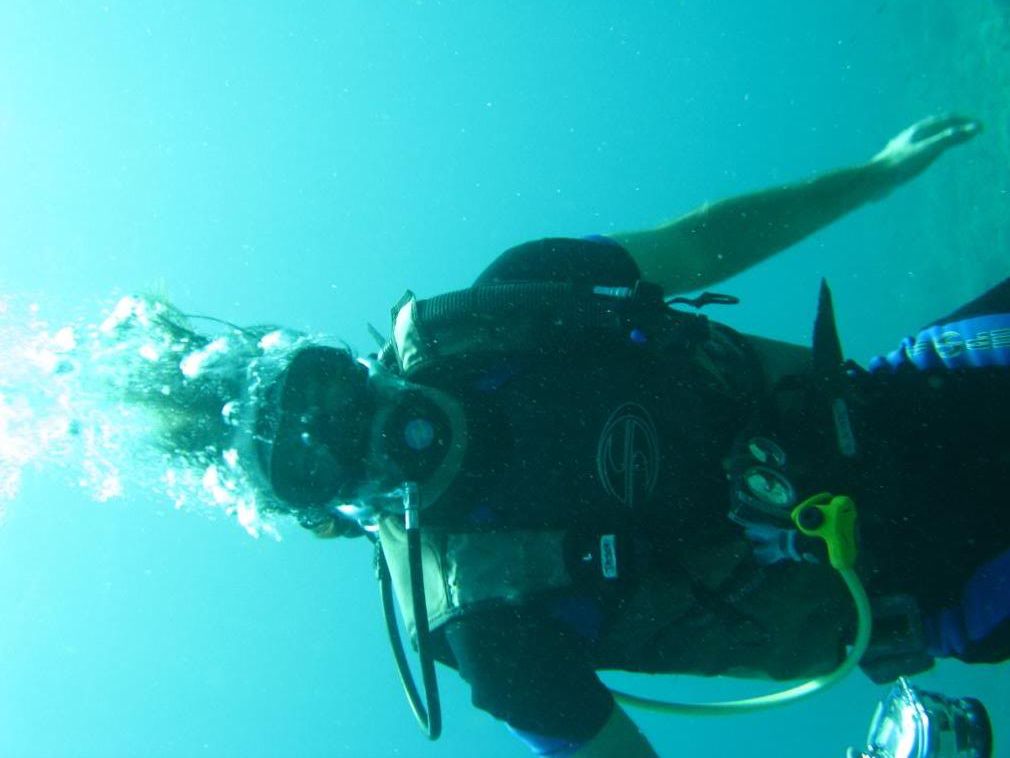 That afternoon he completed the navigation dive but the night dive was pushed back due to the full moon. That evening, we ate dinner at a place that had private viewing booths on the beach with tvs/dvds; we initially picked the Bourne Supremacy but after seeing a person's head in the corner of the screen, we switched to 300, a solid albeit violent flick. The next morning Jason did the deep dive, which was pretty cool; then the peak performance buoyancy, where we tried to hone our skills and did back flips a la the Matrix; then the night dive, which was much scarier than he thought it would be. It didn’t help that the boat drivers stopped at the wrong place so we had to ride the sides of the boat for about 10 minutes before climbing back aboard with our gear still on.
 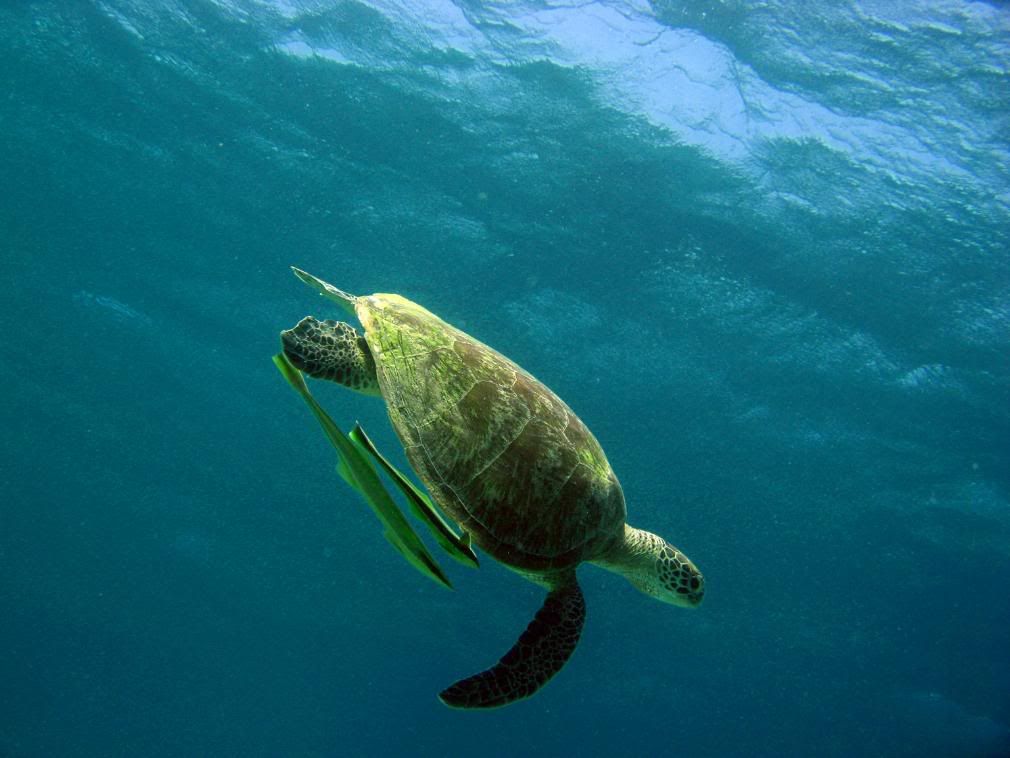 The final dive was a photography dive. Throughout the course, we saw lots of cool things like massive turtles, a Spanish dancer, an octopus, and a school of big bumpheads. While Jason was diving, Priti enjoyed a day of snorkeling on a glass bottom boat that took her to two other islands, where she saw lots of fish and turtles as well.